thebarange.com

Barange's travelogue Korea. (based in seoul, South Korea)

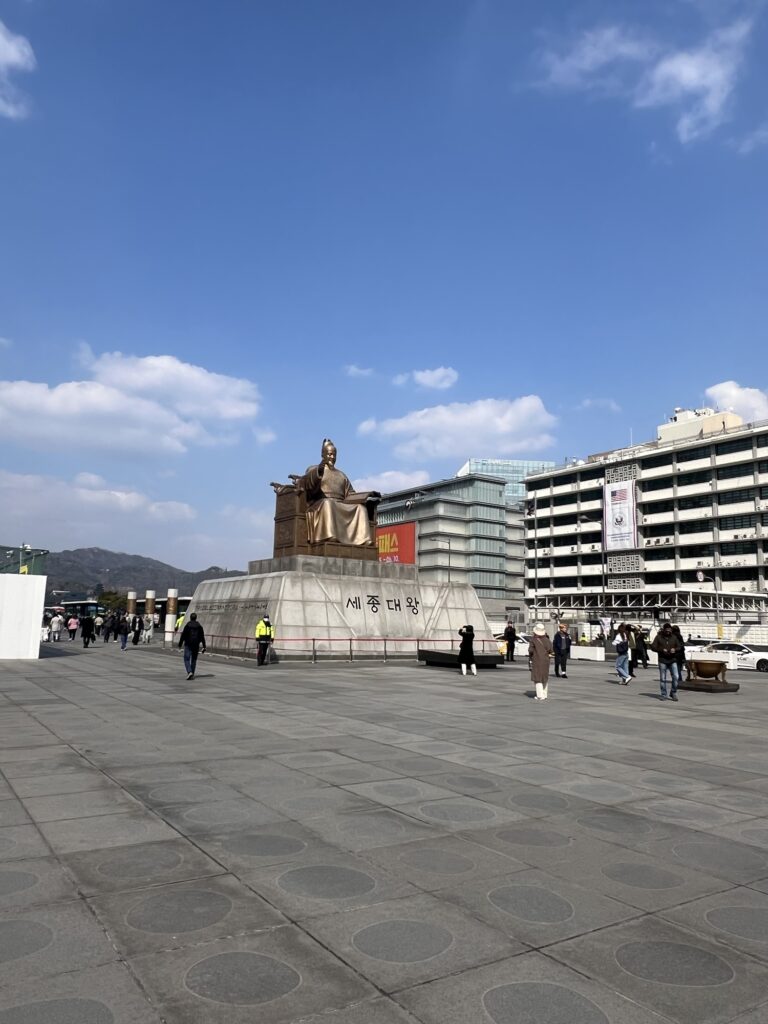
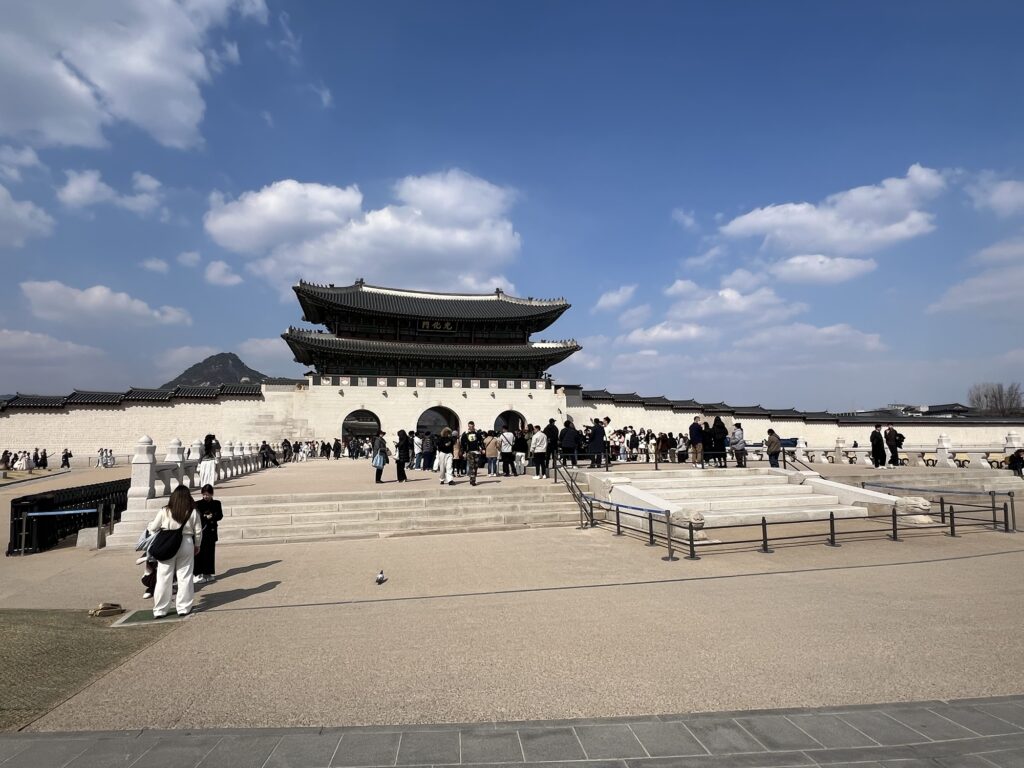
gwanghwamun, photo by barange


Gwanghwamun is one of the most recognizable addresses in Seoul. The plaza, the palace, the wide boulevards lined with government ministries and major corporations — it is a district defined by scale and significance. Most visitors who come here are focused on the landmarks. Most workers who come here every day are focused on something else entirely: finding a good lunch, a decent coffee, and somewhere to sit for an hour without feeling like a tourist.
This guide is for both groups, but it is written from the second perspective. The four stops below — a hand-drip café hidden near the palace, a legendary basement restaurant that feeds the office crowd, a standing espresso bar that introduced Italian coffee culture to Korea, and a modern café chain that gets the basics exactly right — represent the Gwanghwamun that locals actually use. None of them are on the main tourist circuit. All of them are worth finding.


Stops: Beolsae Café → Oyang Sikgwan → Leesar Coffee → Mijin→ Peer Coffee
Area: Gwanghwamun / Jongno, central Seoul
Best Time: Weekday morning through afternoon
Total Budget: 35,000 – 45,000 KRW per person

photo by barange

Why Gwanghwamun?


The district surrounding Gwanghwamun Plaza is home to a dense concentration of government offices, media companies, law firms, and financial institutions. This means the lunch and coffee culture here has been shaped not by tourism but by the daily needs of tens of thousands of working people — a demanding, repeat-visit audience that keeps mediocre places out of business quickly and rewards genuinely good ones with extraordinary loyalty.
The result is a neighborhood where the best spots are often invisible to visitors: basement restaurants with no English signage, standing coffee bars tucked into office building lobbies, hand-drip cafés that have been quietly operating for years without ever appearing in a travel guide. This course maps four of them into a practical, enjoyable half-day that works whether you are a local on a lunch break or a visitor who wants to experience the city the way residents do.


☕ Stop 1: Beolsae Café (벌새) — Hand-Drip Coffee Near Gyeongbokgung
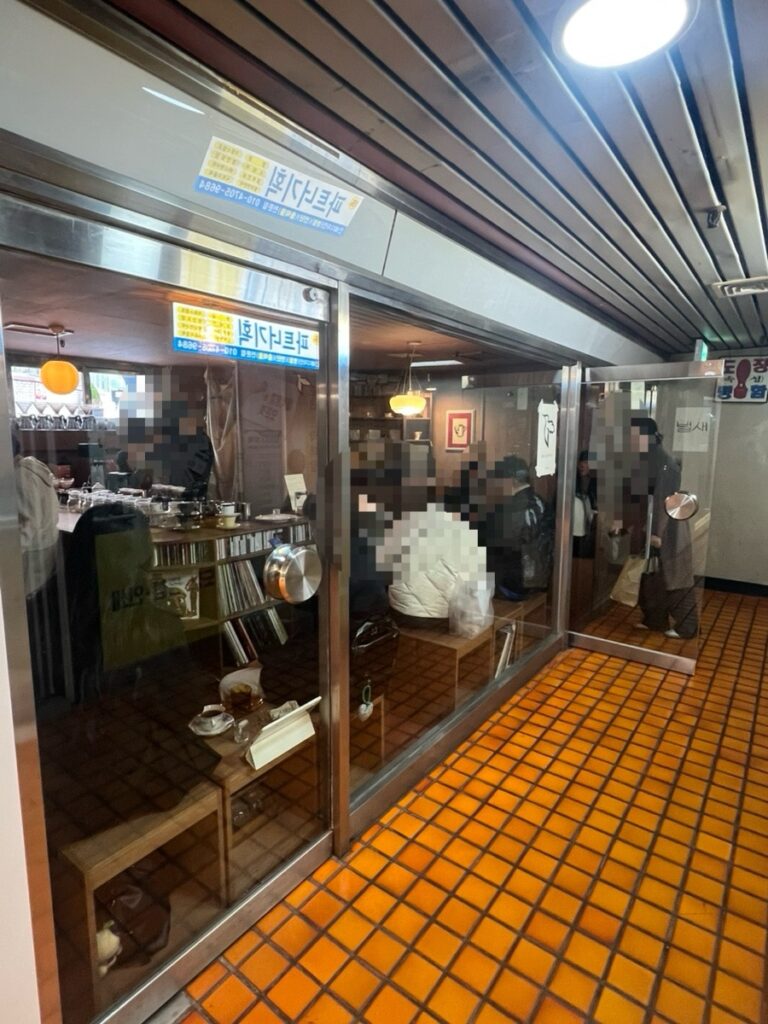
The external appearance of cafe ‘Beolsae’
unique chairs
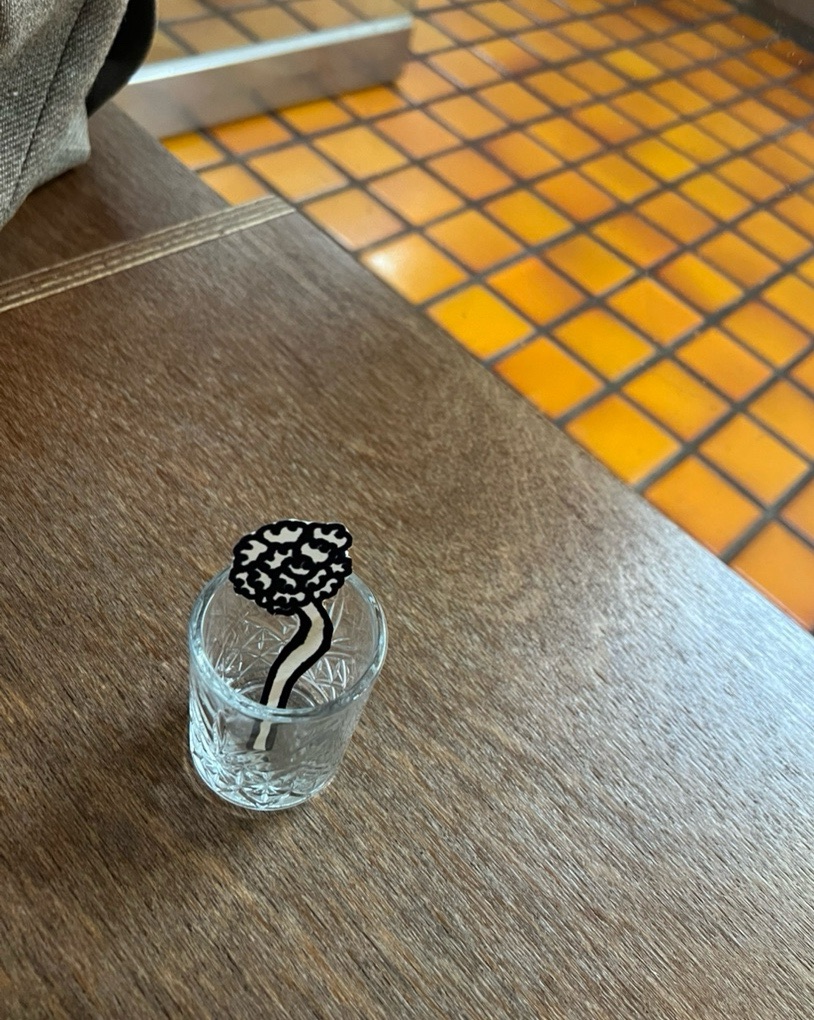
paper flower

The Name and the Space


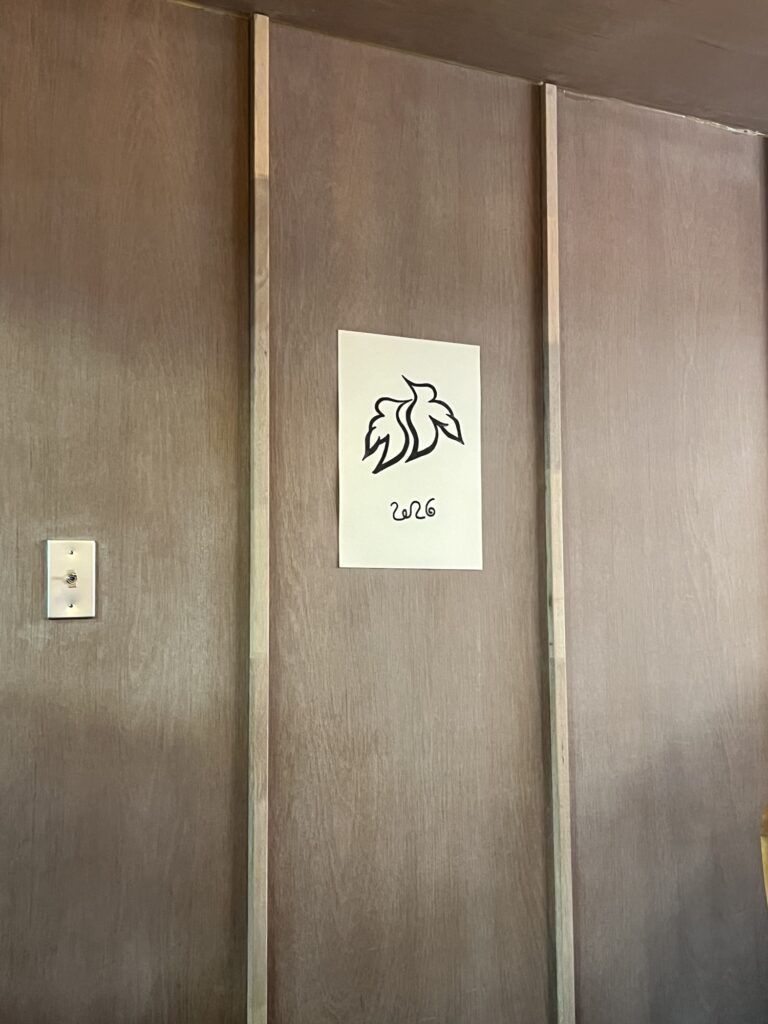
Beolsae means hummingbird in Korean — a name that fits the café’s scale and sensibility perfectly. Small, delicate, and vibrant, Beolsae operates as a hand-drip specialist near Gwanghwamun, close enough to Gyeongbokgung Palace that the contrast between the café’s intimate interior and the monumental architecture outside is part of the experience.
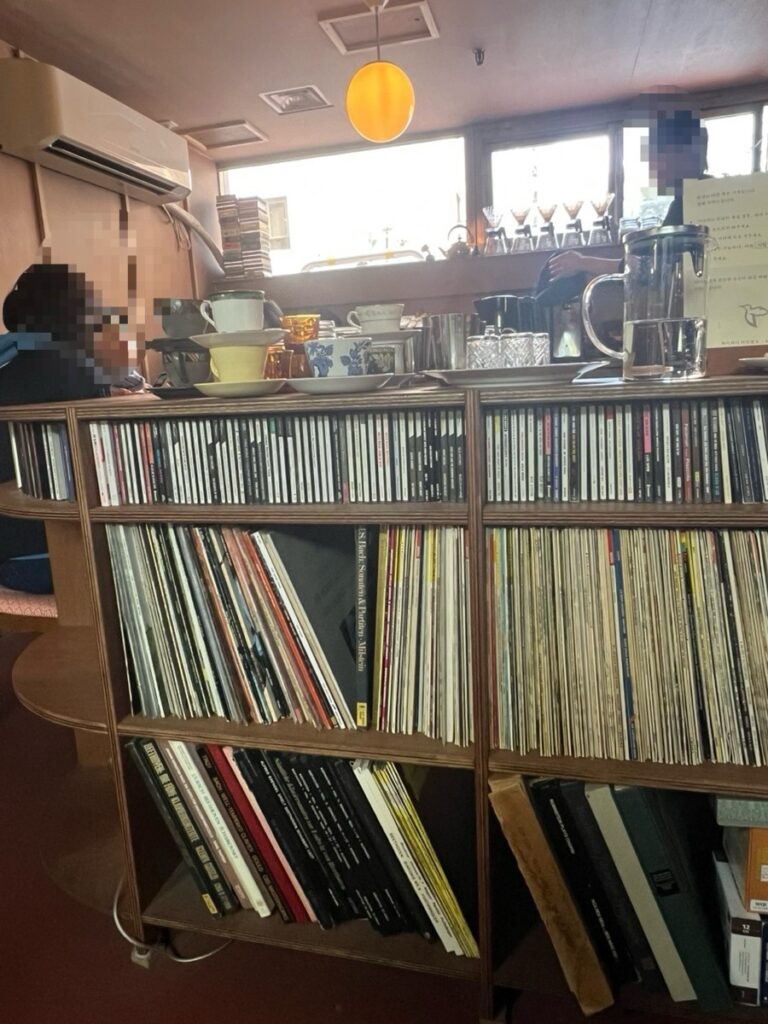
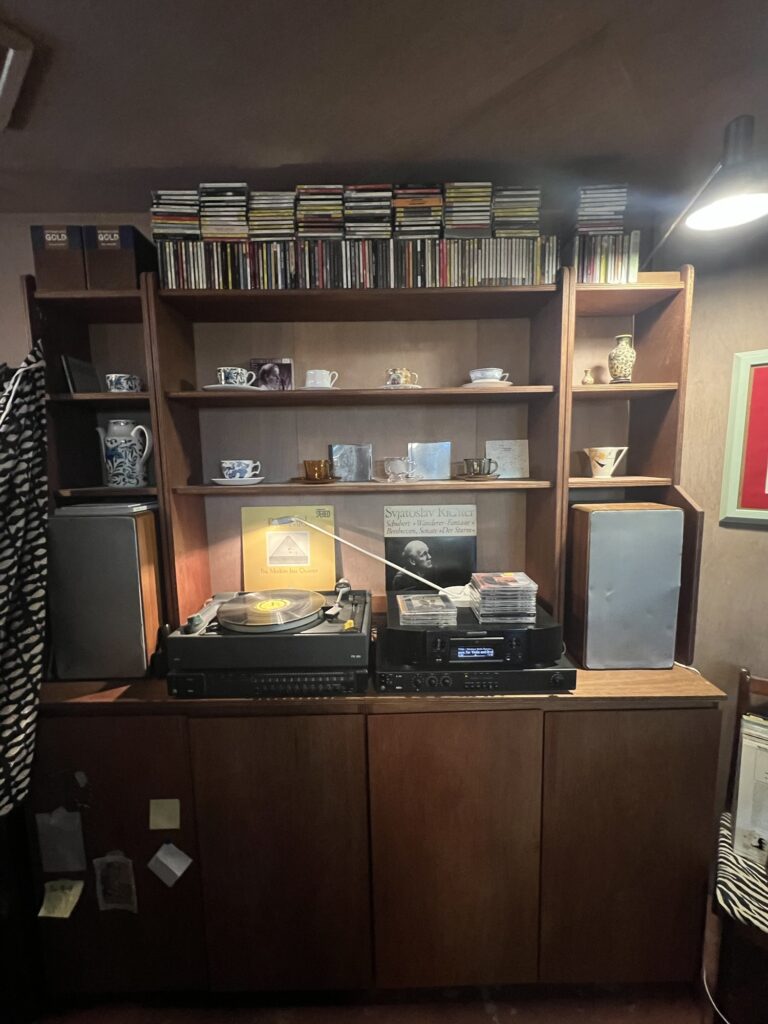
The interior is a carefully assembled world of vintage objects: wooden furniture worn to a comfortable softness, antique cups lined up along the bar, a ceiling light that recalls the warm, amber glow of a Korean living room from the 1980s. There is a paper flower in a glass that does not wilt — a small, deliberate detail that communicates the kind of attention the space receives. The ambient music and the faint smell of roasting beans create what can only be described as a meditative environment, unusual for a café this close to one of the city’s busiest plazas.

The Coffee

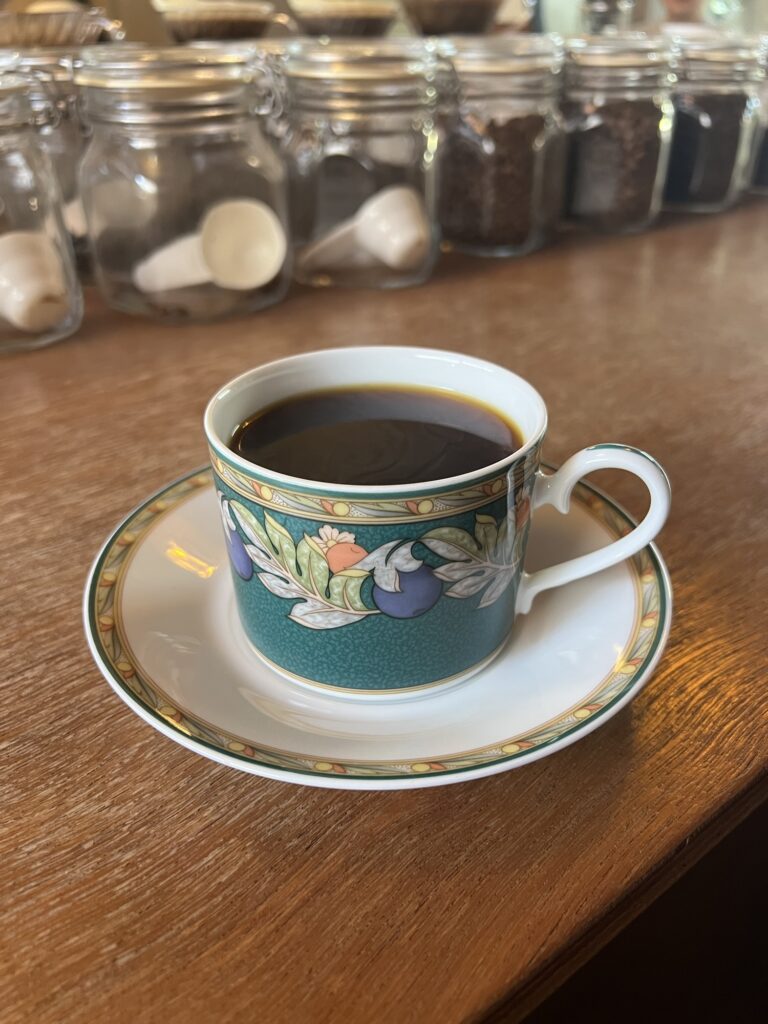
a cup of coffee


Hand-drip coffee is the core offering at Beolsae, and it is prepared with the precision and care that the format requires. Each cup is brewed individually, served in an antique ceramic cup that adds a tactile dimension to the experience. The selection of single-origin beans rotates, and the staff can guide you through what is currently available.
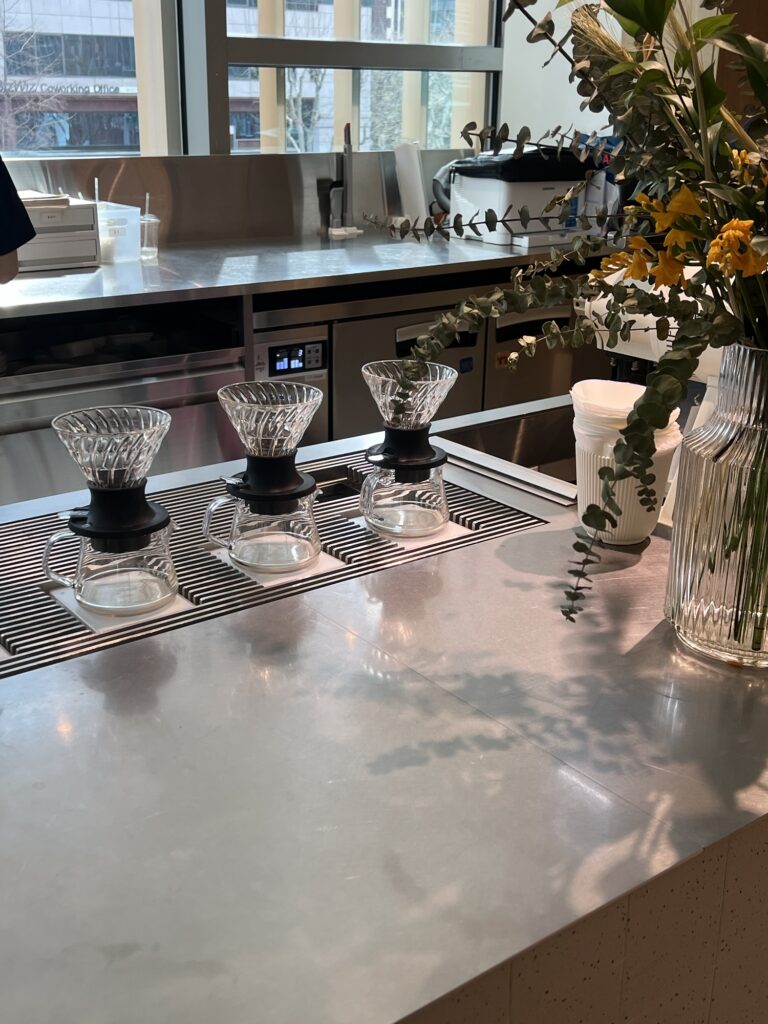
The way sunlight enters the café in the morning, falling across the vintage decor and the rows of drippers on the counter, makes Beolsae a particularly rewarding early stop. It is the kind of café that rewards sitting still and paying attention — qualities that the hand-drip format itself encourages

What to order:

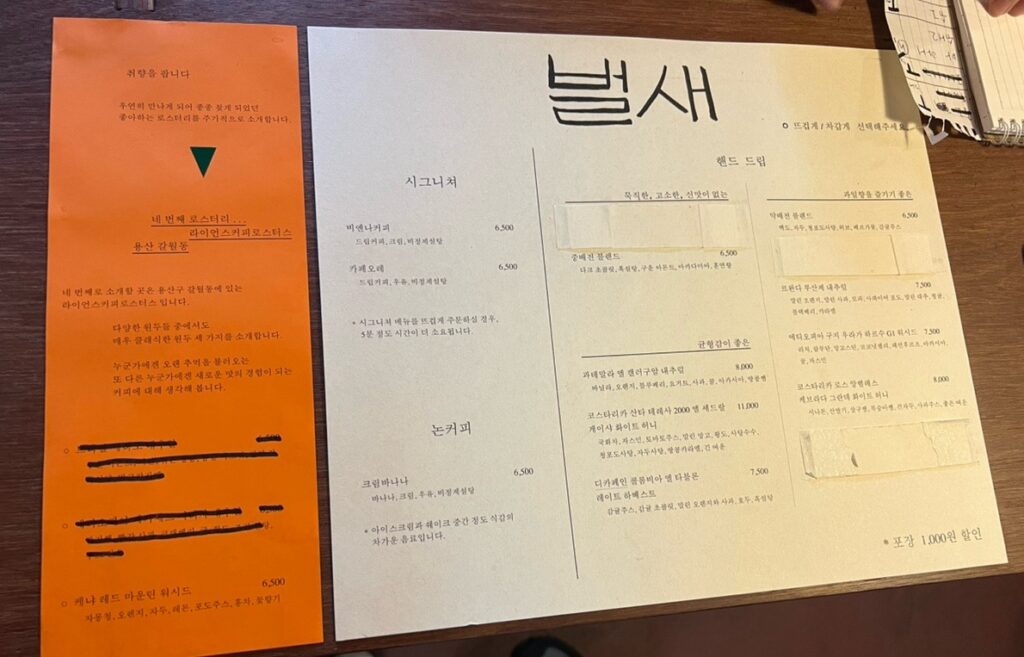
The menu


∙ Hand-drip coffee: Ask for the current single-origin recommendation
∙ Cold brew: Available for those who prefer something cold; consistent quality
∙ Price range: 6,000 – 10,000 KRW
Practical Notes:
∙ Address: 12, Saemoonan-ro 3-gil, Jongno-gu, Seoul (near Gwanghwamun Station, Line 5)
∙ Best for: Solo mornings, coffee enthusiasts, anyone who appreciates quiet vintage spaces
∙ Tip: The café is small and fills during peak hours. Weekday mornings before 10 AM offer the most relaxed experience.

vinyl, There are a lot of albums on display.

Info about Beolsae cafe

Address: 12, Saemunan-ro 3-gil, Jongno-gu, Seoul, Republic of Korea

Opening hours: 11:30am -7pm (Closed on Saturday and Sunday)

Price range: 6,500-11,000won

🍲 Stop 2: Oyang Sikgwan (오양식관) — The Basement Canteen That Feeds Gwanghwamun
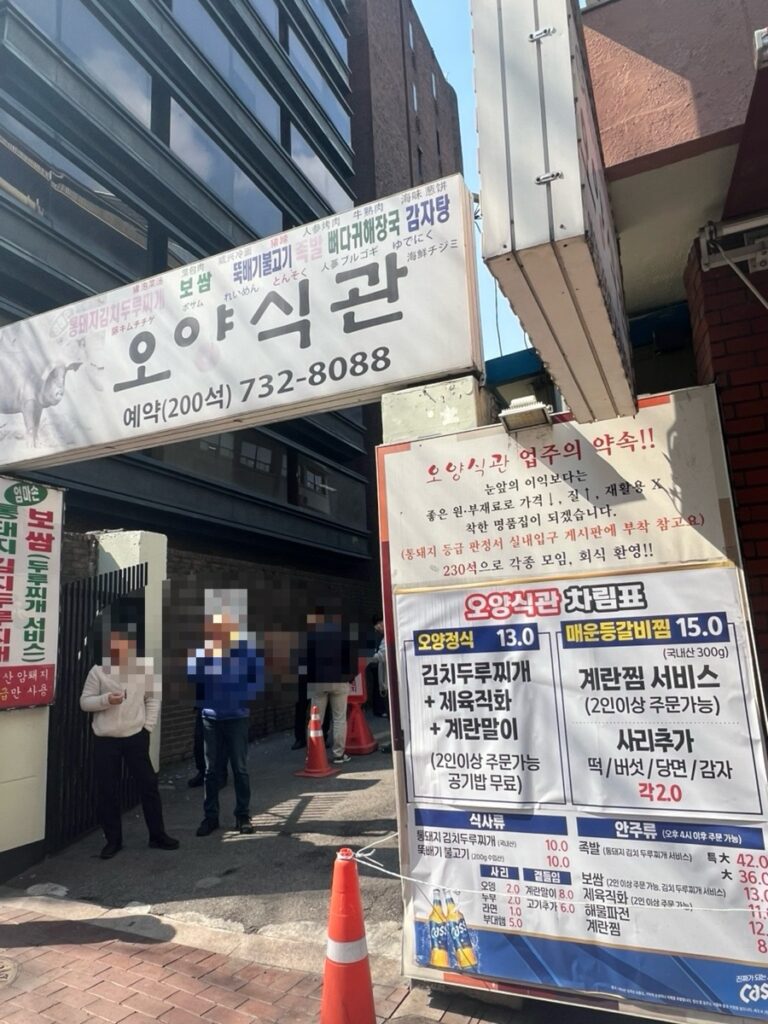
The external appearance of restaurant

Hidden in Plain Sight


Oyang Sikgwan is the kind of place that takes deliberate effort to find on a first visit and becomes completely automatic after that. Located in the basement of an office building on Sejong-daero, it has been feeding the Gwanghwamun working population for long enough that its regulars think of it as simply part of the rhythm of the workday. It is not a restaurant that advertises itself. It survives and thrives entirely on the loyalty of people who return because the food is genuinely good and the price is genuinely fair.
Walking in for the first time, the energy is immediately apparent. This is a lively, bustling space — the kind of basement canteen where the kitchen is loud, the service is efficient, and the tables turn over at lunch in the way that high-demand local restaurants always do. It is authentic in the most literal sense: a place unchanged by outside attention, operating for the people who need it rather than the people who might discover it.

The Food

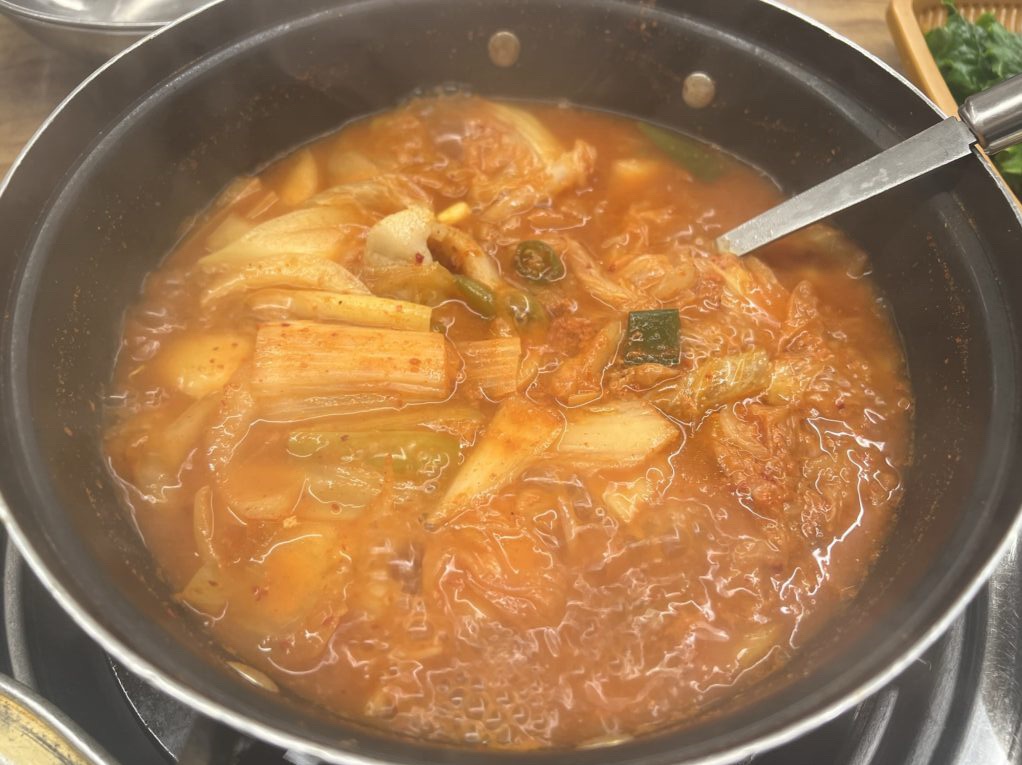
Kimchi jjigae


The signature dishes at Oyang Sikgwan are built around kimchi — specifically, kimchi that has been fermented long enough to develop the deep, complex sourness that distinguishes great kimchi from merely adequate kimchi. This quality of fermentation is the foundation of both the restaurant’s standout dishes.
Kimchi Jjigae (김치찌개): The kimchi stew here has the rich, layered flavor that only comes from long-fermented kimchi cooked properly. The broth is deep and satisfying, and the dish rewards the Korean practice of adding ramen noodles (ramyeon) to soak up the remaining broth — an option available here and highly recommended.
Kimchi Duruchigi (김치 두루치기): Spicy stir-fried pork with aged kimchi. The depth of flavor in the kimchi is remarkable here — the fermentation process that produces it is long and careful, and the result is a dish that is simultaneously spicy, savory, and complex in a way that simpler versions of the dish rarely achieve.
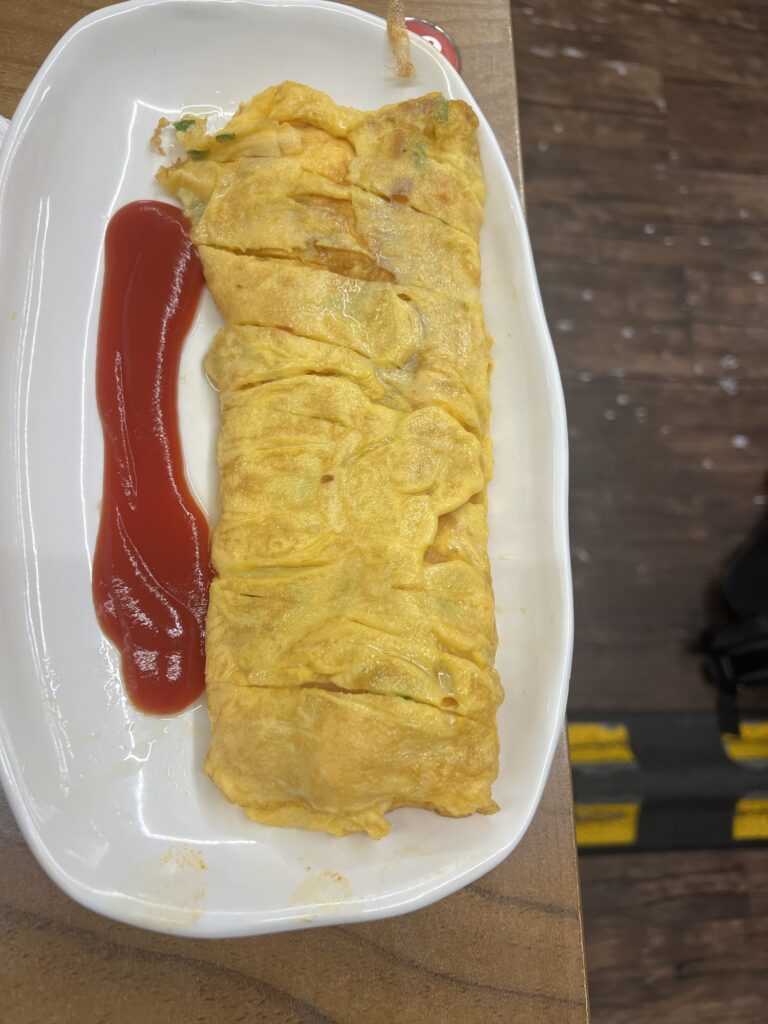
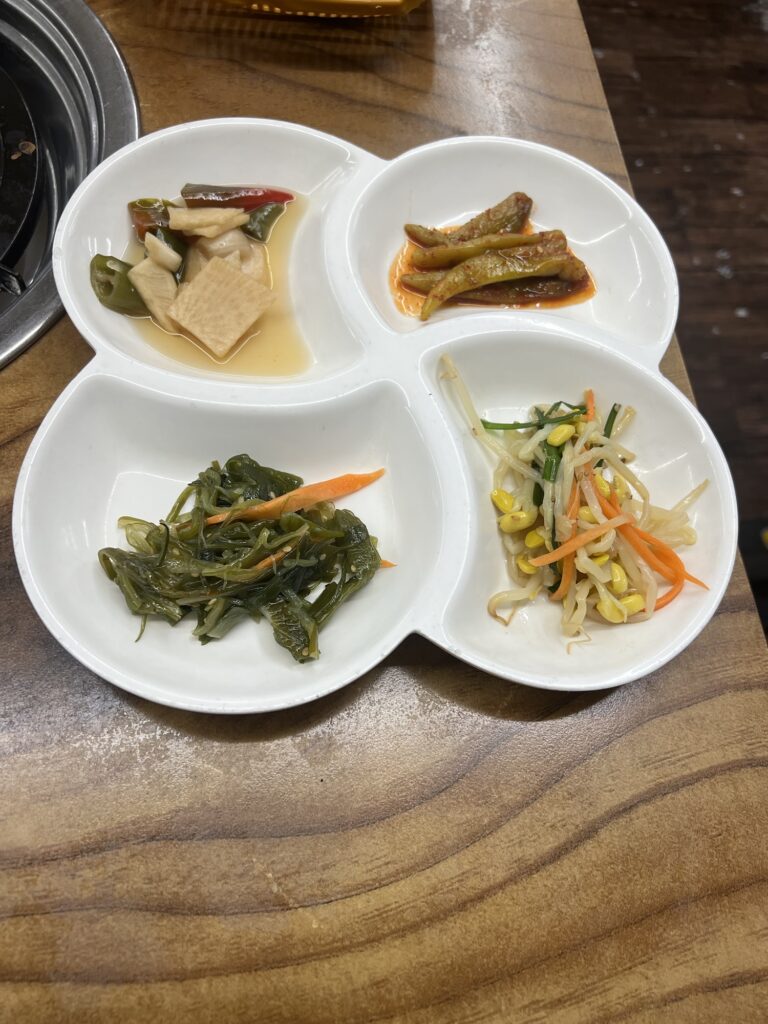
The side dish setup follows the Korean canteen tradition: a self-service bar with unlimited refills of banchan including seasoned vegetables, egg rolls, and pickled items. The egg rolls here in particular carry the kind of savory, home-cooked quality that is difficult to achieve commercially. For visitors who find the spice level challenging, a side of steamed egg (gyeran-jjim) provides an effective balance.

Side dishes

What to order:

gyeran-jjim


∙ Kimchi Jjigae: The flagship dish; add ramen noodles for the full experience
∙ Kimchi Duruchigi: Spicy stir-fried pork with aged kimchi; more intense and complex
∙ Gyeran-jjim (steamed egg): Recommended side dish, especially for those sensitive to spice
∙ Price range: 10,000 – 13,000 KRW per person
Practical Notes:
∙ Address: 49, Sejong-daero 21-gil, Jung-gu, Seoul
∙ Hours: 10 AM – 10 PM (break time 2–4 PM; closed Sundays)
∙ Tip: Arrive before noon to beat the lunch rush. The restaurant fills quickly once the midday crowd arrives from surrounding office buildings. Side dishes are available from the self-service bar — refills are free.
∙ Best for: Anyone wanting to eat the way Gwanghwamun office workers actually eat; people interested in genuine Korean canteen culture

Info about oyangsikgwan

Address: 49, Sejong-daero 21-gil, Jung-gu, Seoul, Republic of Korea

Opening hours: 10am - 10pm(Break time at 2pm-4pm, Closed on Sunday)

Price range: 10,000-13,000won (for 1person)

Stop 3: Leesar Coffee (리사르 커피) — Italy’s Espresso Bar, Transplanted to Jongno
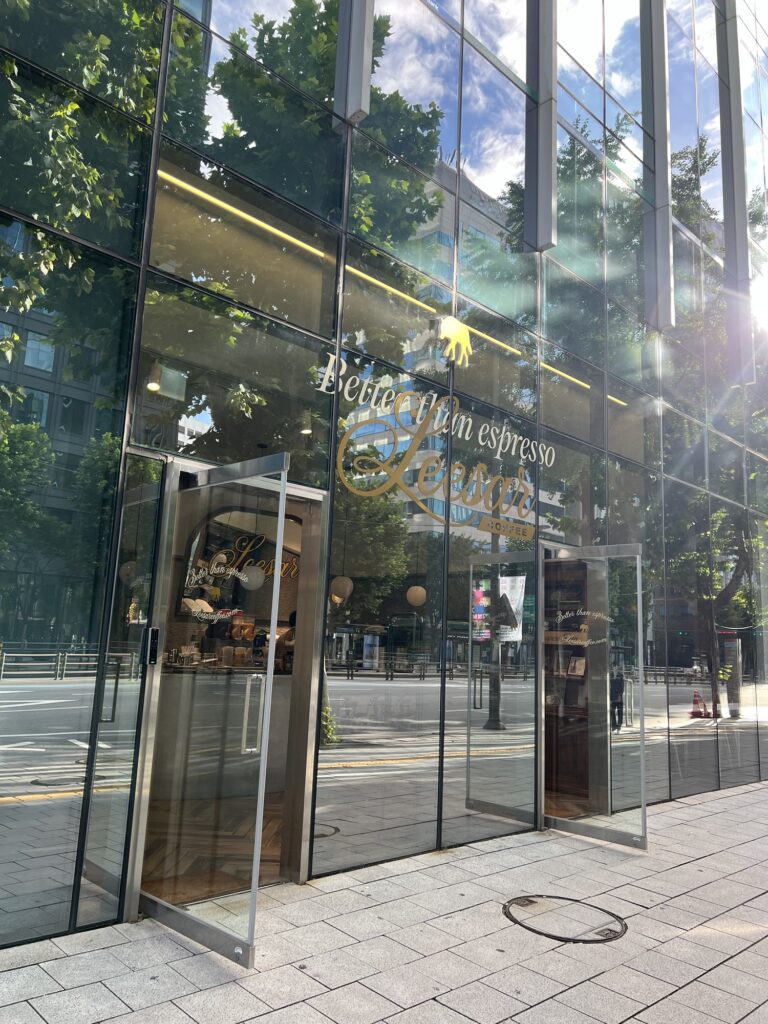
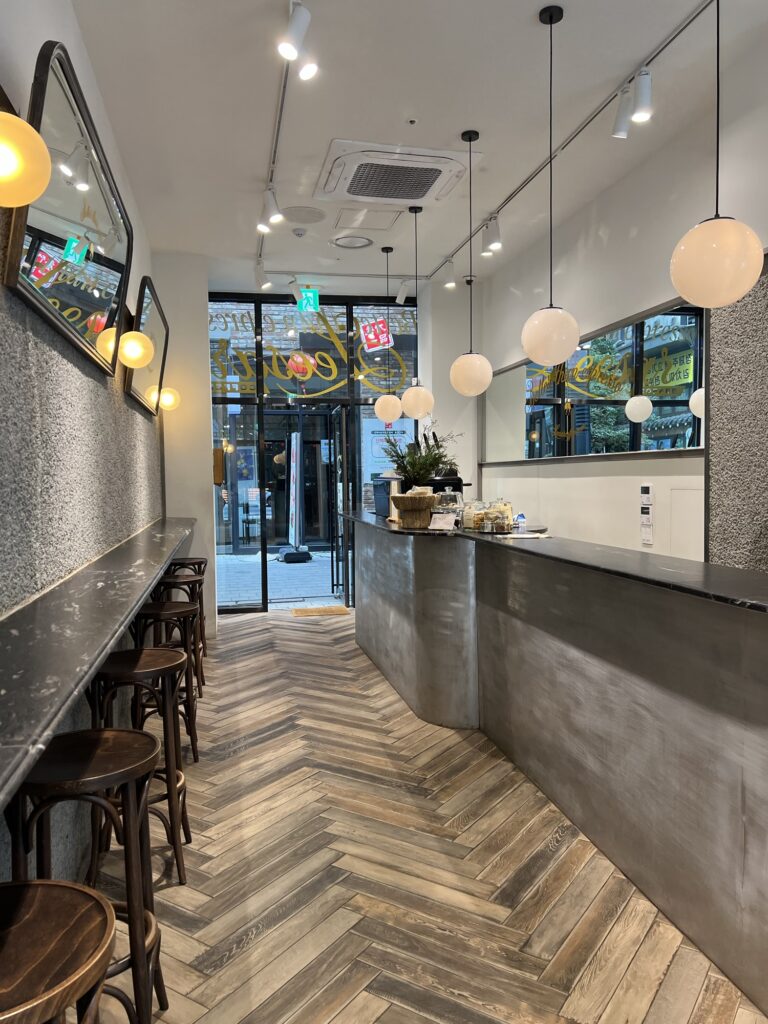
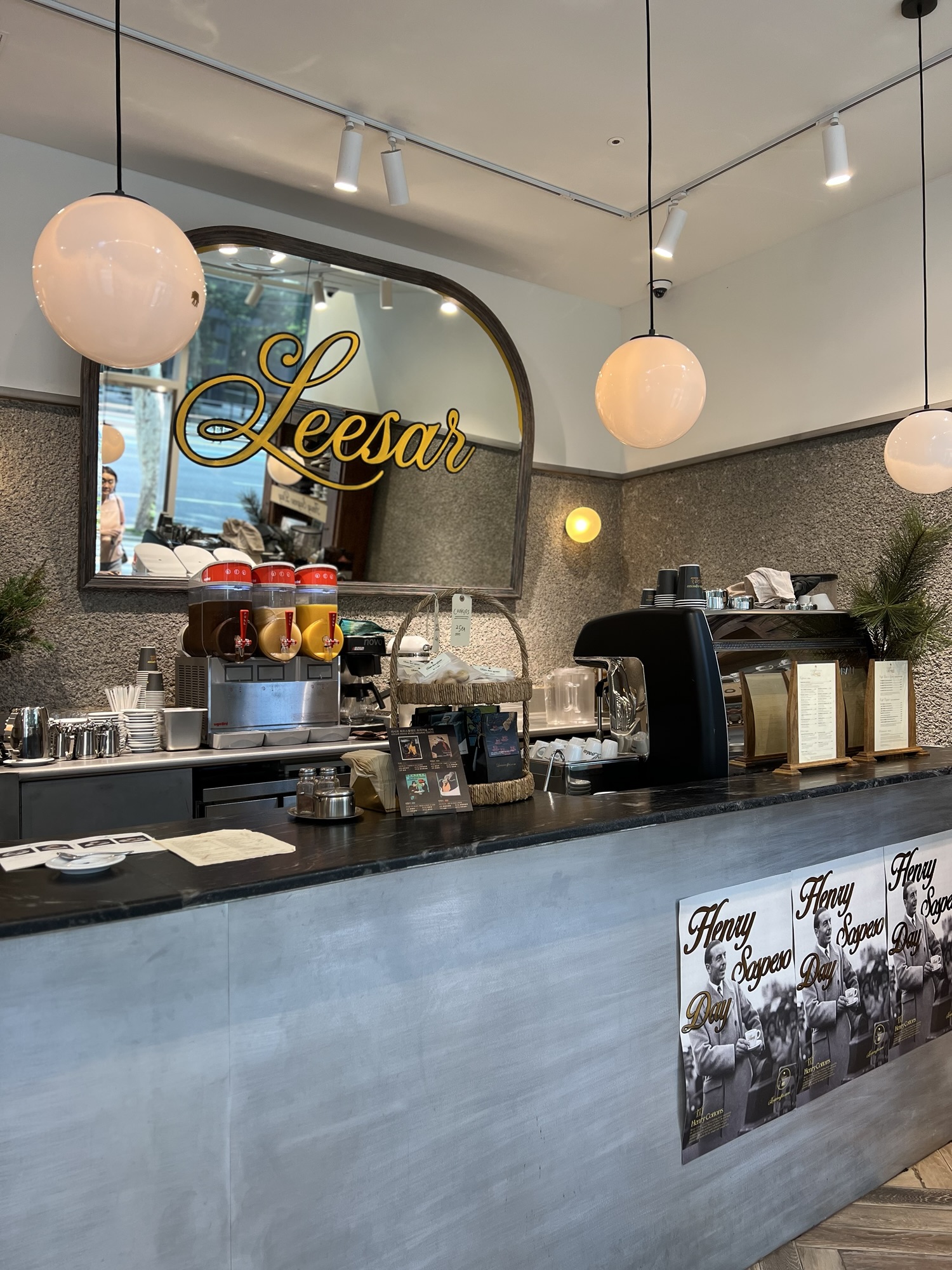
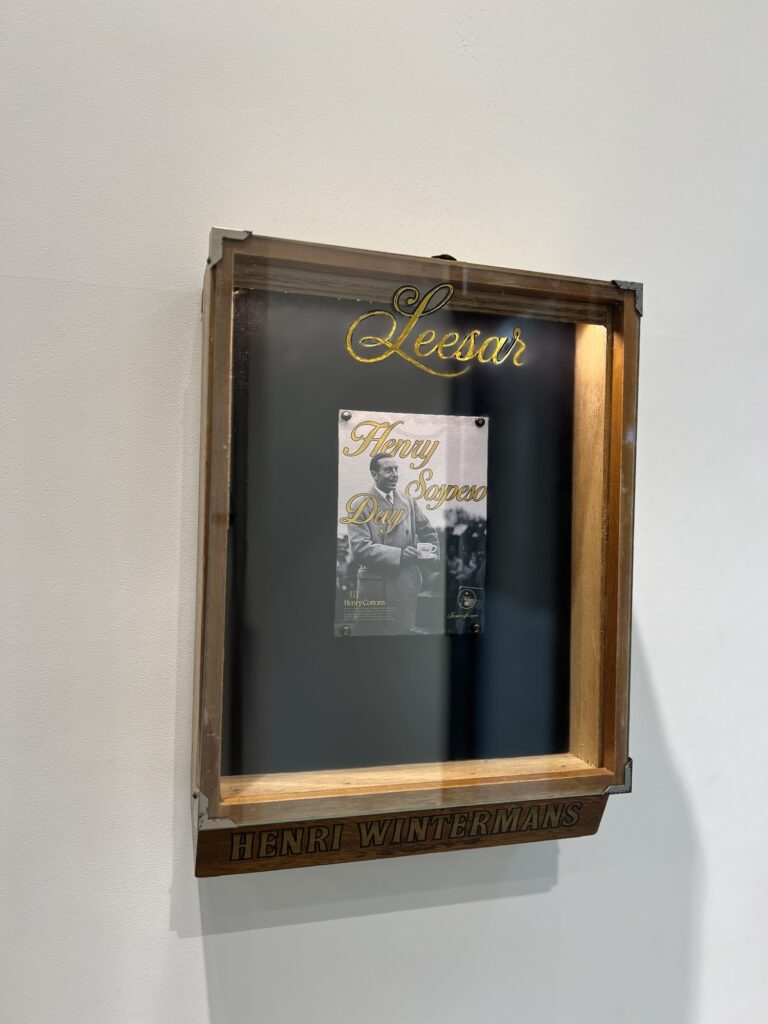
The external appearance of ‘Leesar’, photo by barange

The Pioneer of Standing Espresso in Korea

Leesar photo by barange


Leesar Coffee holds a specific place in the history of Seoul’s coffee culture: it is widely credited as the café that introduced the Italian standing espresso bar format to South Korea. In Italian bar culture, you order at the counter, drink your espresso standing, and move on — the entire visit takes five minutes, and the coffee is the point rather than the experience of sitting. This model was effectively unknown in Korea before Leesar, where café culture had developed around long, seated visits.
The Jongno branch of Leesar Coffee brings this model to one of Seoul’s most historically significant districts with a sophistication that matches the surroundings. The interior features dark wood and stone — materials that create a warm, focused atmosphere where the bar and the espresso equipment occupy the visual center. The lighting falls on the counter in a way that makes the stacked cups and the preparation process look, as one regular described it, like a still from a classic European film.

The Espresso

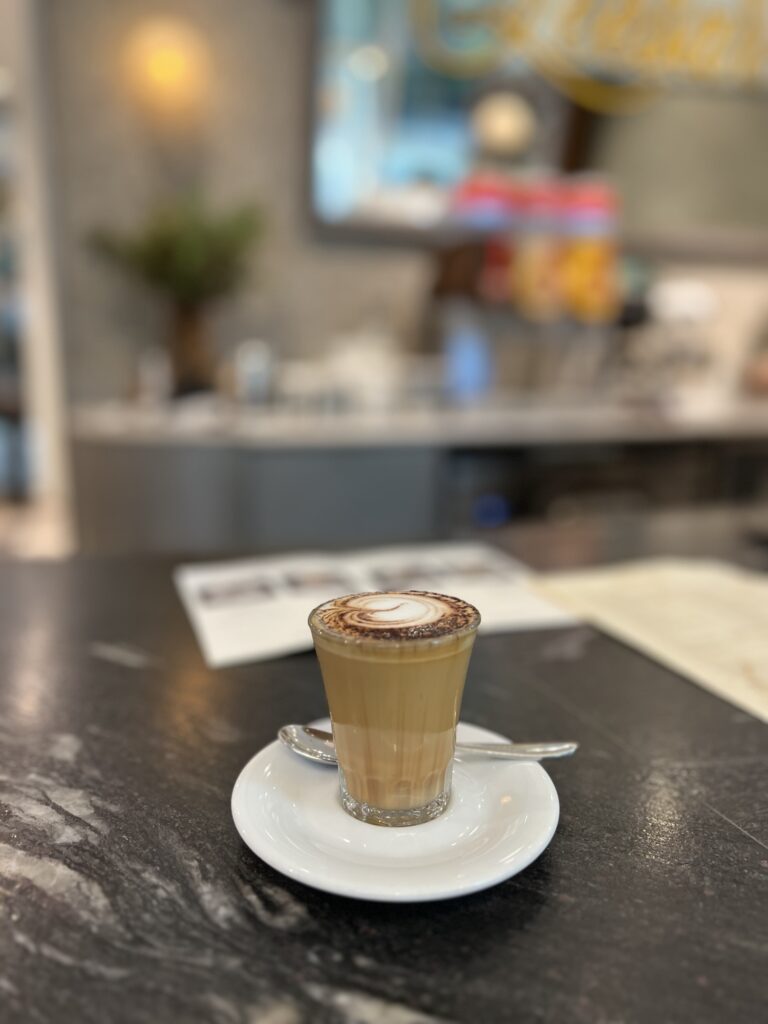
Leesar espresso


Leesar’s coffee program is built around espresso, and the quality is consistently high. The menu is deliberately focused — this is not a café with dozens of seasonal variations. It is a café that has decided what it does well and does it without deviation.
Cafe Caffe (에스프레소): The classic. Balanced, rich, and served with the option of sugar. This is the entry point and the benchmark.
Cafe Pieno: Espresso topped with cocoa powder and cream. Thick and velvety — a good introduction to espresso for those who find straight shots too intense.
Cafe Onneroso: The fan favorite. Espresso with cream and a dash of milk, functioning like a highly concentrated miniature latte. The combination of intensity and softness makes it deeply satisfying in a small format.
The standing format changes how you experience the coffee. Without a chair to settle into, the focus naturally falls on what is in the cup. Leesar Coffee is genuinely efficient — you can have an excellent espresso and be back on the street in under ten minutes — but it is also genuinely pleasurable in a way that the standing format, done properly, always is.

What to order:


∙ Cafe Onneroso: The most popular option; espresso with cream and milk
∙ Cafe Pieno: Good for espresso newcomers; cocoa and cream soften the intensity
∙ Cafe Caffe: The straight espresso; the best way to evaluate the coffee itself
∙ Price range: 3,500 – 5,500 KRW
Practical Notes:
∙ Location: Jongno district, near Gwanghwamun (multiple branches; the Jongno branch has the wood-and-stone interior)
∙ Format: Standing bar only — no seats
∙ Best for: Quick coffee between stops, espresso enthusiasts, anyone curious about Italian café culture in a Korean context
∙ Tip: The stacked espresso cups on the dark counter are a signature visual of the space. Arrive during a quiet moment to appreciate the atmosphere without the lunch crowd.

Info about Leesar coffee

Address: 7, Jong-ro 5-gil, Jongno-gu, Seoul, Republic of Korea

Opening hours: 7am -9pm (last order 8:30pm)

Price range: 2,800-5,500won


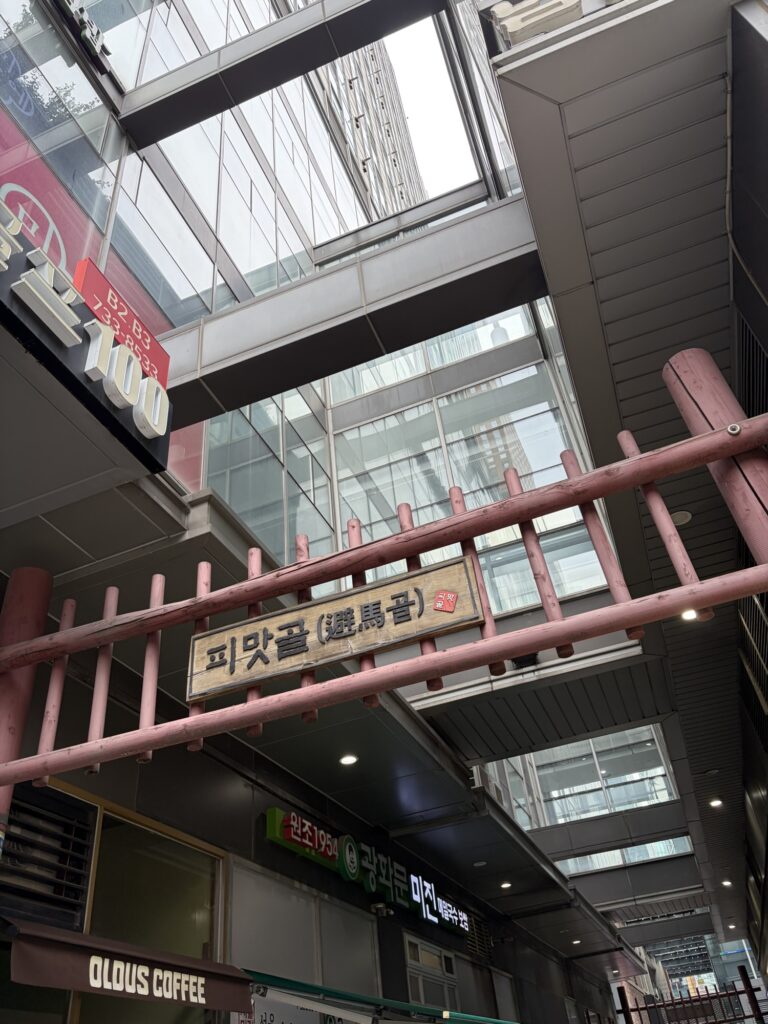
Stop4: Mijin (미진): Gwanghwamun’s Legendary Buckwheat Noodle Restaurant
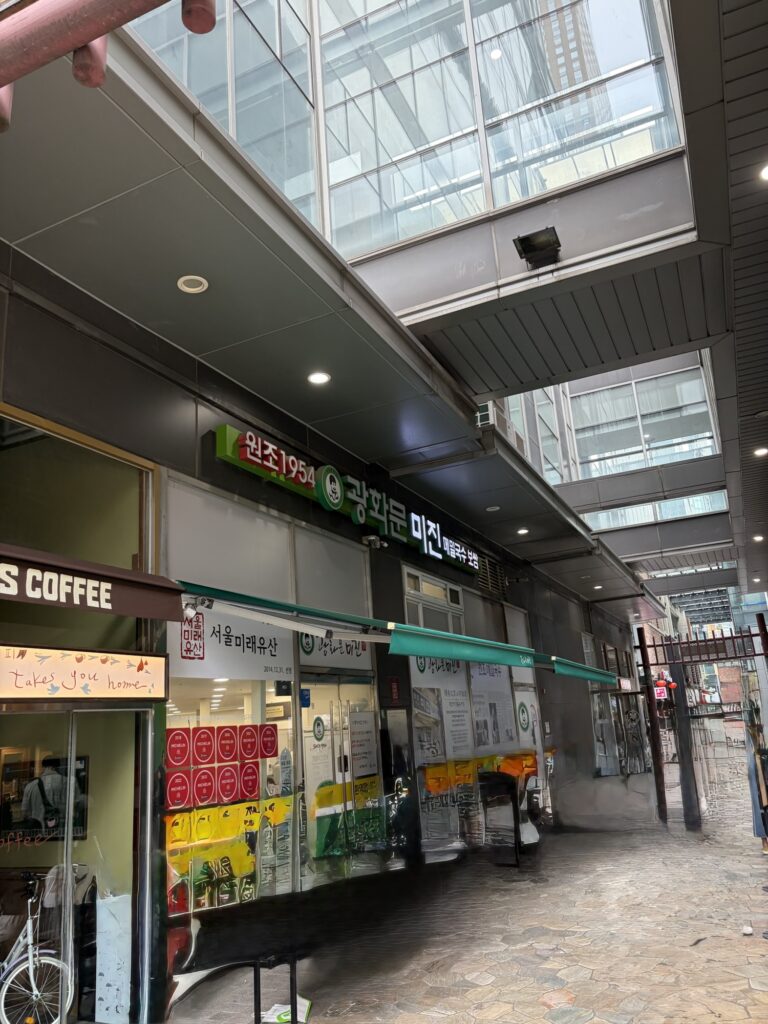

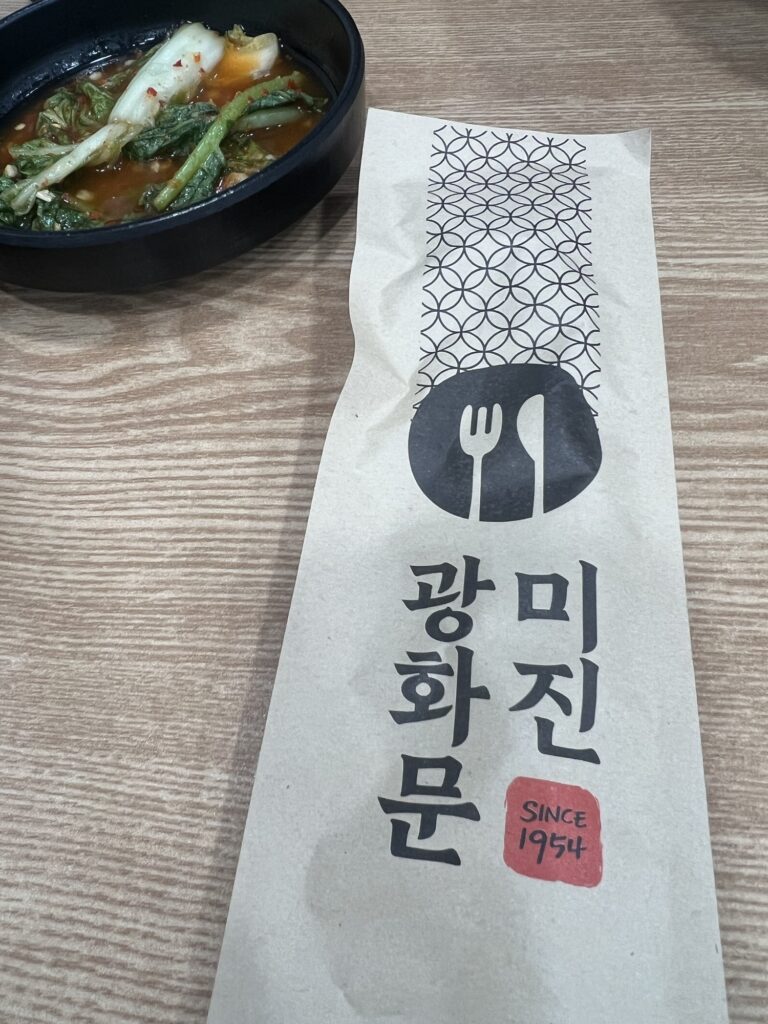
There are restaurants in Seoul that survive on reputation alone, and there are restaurants that survive because they are genuinely, consistently excellent. Mijin (미진) in Gwanghwamun is firmly in the second category. Established in 1954, it has been serving Korean-style buckwheat noodles from the same location for over seventy years — long enough that generations of Seoul office workers have made it a regular part of their working week, long enough that the Michelin Guide has recognized it with a Bib Gourmand designation multiple years running, and long enough that the restaurant itself has been designated a Seoul Future Heritage site by the city government.
The queue outside on any given lunchtime tells you everything you need to know about how the city feels about it.

What Mijin Is


Mijin is a specialist restaurant — it does one thing, and it does that one thing at a level that has kept people coming back for seven decades. That thing is Korean-style cold buckwheat noodles (naengmyeon style, but specifically the buckwheat noodle tradition known locally as momil or memil), served with a broth and preparation that is distinctly Korean rather than Japanese.
This distinction matters. Japanese soba — the buckwheat noodle format most internationally known — uses a tsuyu dipping sauce built on a dashi base. Mijin’s noodles are served with a rich, deeply savory Korean soy-based broth seasoned with grated radish, seaweed flakes, and spring onion. The flavor profile is simultaneously salty, slightly sweet, and deeply satisfying in a way that the lighter Japanese style rarely achieves. It is a Korean interpretation of buckwheat noodle culture that has developed its own distinct identity over the course of seventy years of refinement.
The noodles themselves are made fresh in the restaurant’s own basement facility, where the kitchen produces both the buckwheat noodles and the broth daily. The noodles are aged for approximately one day after kneading, which develops the elasticity and chewiness that regular customers cite as one of the defining qualities of Mijin’s product. You can taste the difference between noodles made this way and noodles that have not received the same attention — and at Mijin, that difference is immediately apparent.

The Atmosphere


Walking into Mijin, the first impression is of a restaurant that has not felt the need to update its appearance to suit contemporary café aesthetics. The interior is a genuine old-school Korean restaurant — worn in the way that places wear well when they are genuinely used rather than carefully maintained for appearance. The walls carry the accumulated evidence of years of recognition: Michelin Guide certificates, newspaper clippings, awards. None of it feels like decoration. It feels like a record.
The pace inside is efficient rather than leisurely. Mijin serves a lot of people in a short time, and the operation reflects this: tables turn over quickly, service is direct, and the overall rhythm is shaped by the fact that there are always more people waiting outside. This is not a restaurant where you linger after finishing your meal. You eat well, appreciate what you have eaten, and make room for the next group. That rhythm is not unfriendly — it is simply the character of a restaurant that has been feeding a neighborhood at volume for a very long time.

What to Order


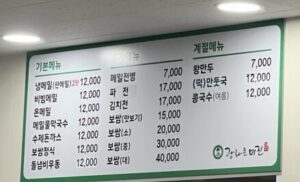
Pan Memil (판메밀) — Cold Buckwheat Noodles
The signature dish, and the reason most people visit. A single order arrives as two portions of buckwheat noodles on a wooden tray (pan) — more than it looks like from a distance. The noodles are firm, chewy, and distinctly buckwheat in flavor: slightly earthy, nutty, and clean on the palate.
Each table is supplied with a pitcher of cold broth. The correct way to eat pan memil at Mijin is to pour the broth over the noodles, add grated radish, seaweed flakes, and spring onion from the condiment tray on the table, and eat immediately. The broth is rich and savory with a subtle sweetness — the kind of flavor that is immediately satisfying and quietly addictive. Korean regulars often describe it as jungdokseong itda — literally “it has addictiveness” — which is as precise a description as the dish requires.
Donkatsu (돈까스) — Japanese-Style Pork Cutlet
The donkatsu at Mijin is one of those menu items that surprises people who come for the noodles and discover, often through the recommendation of a regular sitting nearby, that the pork cutlet is unexpectedly excellent. Breaded and fried to a proper crisp, with meat of noticeably good quality, it functions as both a standalone dish and a natural companion to the cold noodles.
The combination of cold buckwheat noodles and donkatsu is one of Mijin’s most popular ordering patterns — the richness and warmth of the cutlet contrasting with the cool, clean noodles in a way that makes both dishes better. For first-time visitors who want to experience the full range of what Mijin does well, ordering both is the right approach.
Additional Menu Items
∙ Bibim Memil (비빔메밀): Buckwheat noodles in a spicy mixed sauce rather than broth — a good alternative for those who prefer something with more heat
∙ Memil Jeonbyeong (메밀전병): Buckwheat crepes; a traditional Korean snack that works well as a side dish
∙ Bossam (보쌈): Boiled pork with kimchi and vegetables; a substantial addition for larger groups or bigger appetites
Price range: 11,000 – 18,000 KRW per dish

info about mijin

address: 1F, 19, jongro, jongrogu, seoul

Opening hours: 10:30 am - 9pm, last order 8:30pm

price range: 12,000-20,000won (1 person)

The Michelin Recognition


Mijin has received the Michelin Bib Gourmand designation — awarded to restaurants that offer exceptional food at a moderate price — for multiple consecutive years. The Bib Gourmand category is specifically designed to recognize places that deliver genuine quality without the pricing of starred restaurants, which makes it a particularly appropriate recognition for a restaurant like Mijin: a place where exceptional buckwheat noodles cost less than 15,000 KRW and where the value of the experience comes from the food rather than the setting.
The certificates are displayed at the entrance. There are several of them.


Stop 5: Peer Coffee (피어 커피) — The Modern Café That Gets Everything Right
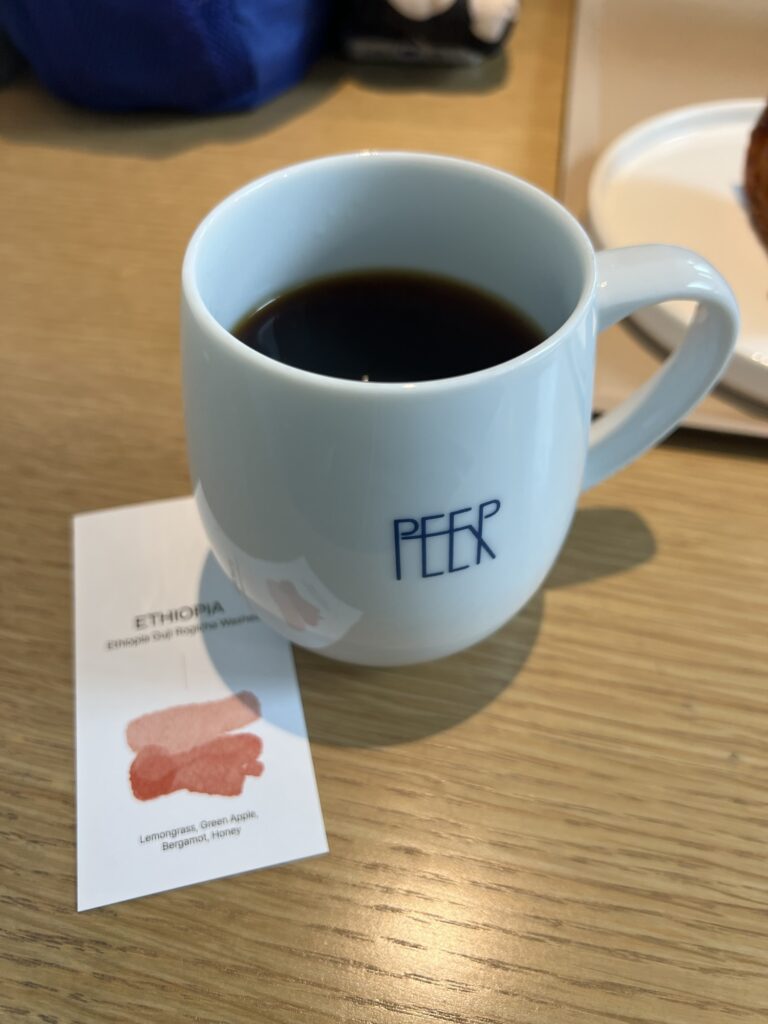
A Different Kind of Chain


Peer Coffee occupies a distinct position in the Gwanghwamun café landscape. It is a small chain — not a multinational brand, but a Korean café group with multiple locations — and it brings to each space a level of considered design and operational quality that independent cafés sometimes struggle to maintain consistently.
What distinguishes Peer Coffee from comparable options in the area is the combination of a genuinely spacious interior, modern design that feels comfortable rather than cold, reliable coffee quality, and the practical amenity that has become increasingly important for the working population it serves: accessible power outlets at most seating positions.

The Space


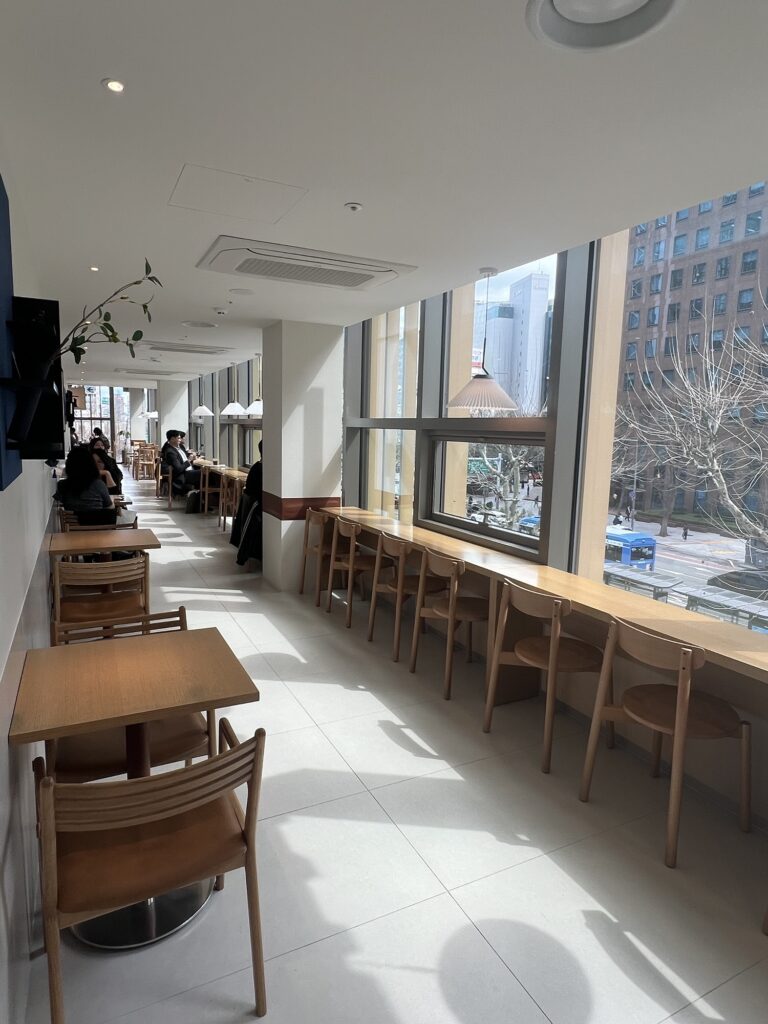
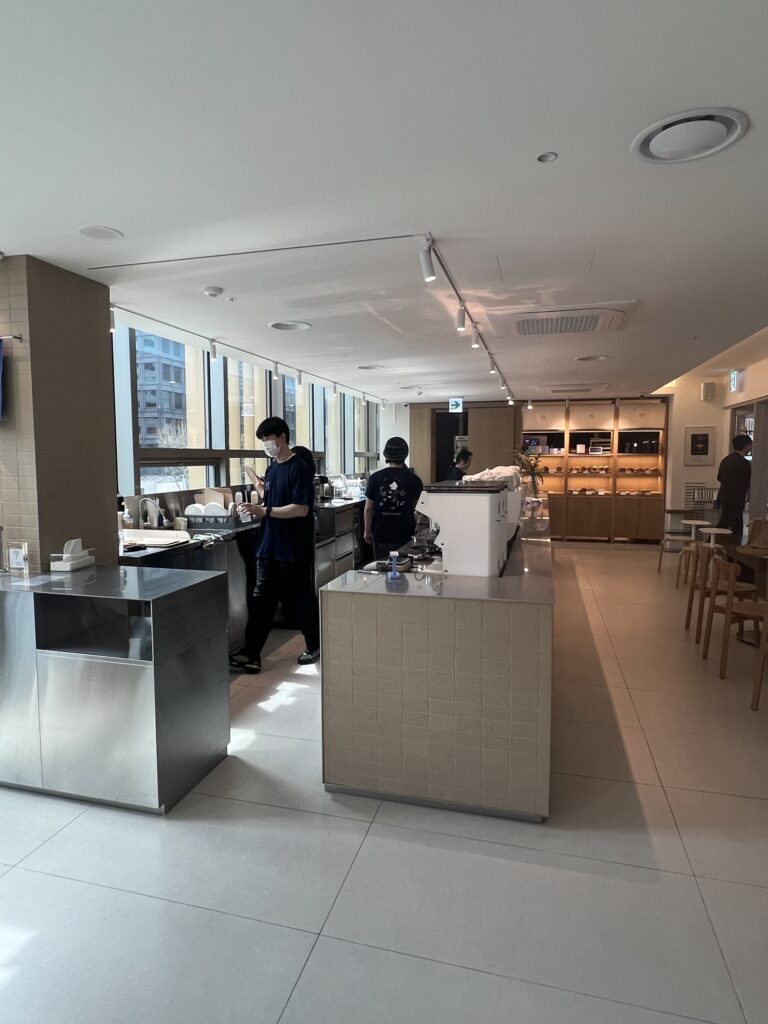
The interior at Peer Coffee is clean, modern, and deliberately uncluttered. The seating layout is generous — tables are spaced with enough room that conversations feel private and working feels comfortable. The lighting is bright enough for extended laptop sessions without being harsh. The overall atmosphere is calm and functional in a way that the word “modern” often implies without always delivering.
For the Gwanghwamun office worker, Peer Coffee serves a specific need: a café where you can settle in for an hour or two with a laptop, a reliable coffee, and a charged phone. The outlets make this practical rather than merely possible. The space makes it pleasant rather than merely functional.

The Coffee

peer coffee


The coffee menu at Peer Coffee covers the standard range of espresso-based drinks, executed with consistency. This is not a roastery with rotating single-origin selections or a standing bar focused on espresso intensity — it is a café that serves good coffee reliably, which is exactly what a working café needs to do. The latte is smooth and well-proportioned. The Americano is clean. Neither asks more of you than you are ready to give at the end of a working morning.

What to order:


∙ Cafe Latte: The reliable choice; smooth and consistent
∙ Americano: Clean and straightforward
∙ Price range: 4,500 – 7,000 KRW
Practical Notes:
∙ Location: Gwanghwamun / Jongno area (multiple branches)
∙ Power outlets: Available at most seating positions
∙ Best for: Working sessions, post-lunch coffee with extended sitting, anyone who needs a comfortable and spacious café environment
∙ Tip: Peer Coffee handles the working-café function that the other stops on this course do not — if you need to sit for an extended period with a laptop after lunch, this is the natural end point of the day.

info about peer coffee

address: 2F, 33, jongro, jongrosu, seoul

Opening hours: 8am - 9pm, weekday, last order 8:30pm

10am - 9pm, weekend & hoilyday

price range: 5,300-8,000won

Who This Course Is For


This course was designed by observing how the people who work in Gwanghwamun actually spend their days — not the landmarks they pass, but the places they choose to eat and drink when the choice is entirely their own.
It works well for:
∙ Office workers in the Gwanghwamun / Jongno area looking for a reliable half-day sequence that covers coffee, lunch, and a working café
∙ Visitors to Gyeongbokgung or Gwanghwamun Plaza who want to experience the neighborhood beyond the tourist circuit
∙ Anyone interested in Korean office culture — Oyang Sikgwan in particular offers an unusually direct window into how the city’s working population eats
∙ Coffee enthusiasts who want to compare three genuinely different approaches to café culture — hand-drip specialty, Italian standing espresso, and modern Korean chain — within a short walk of each other
∙ Remote workers or laptop travelers who need a combination of good food and a productive afternoon café environment


Getting There


Gwanghwamun Station (Seoul Metro Line 5) is the central access point, with exits connecting directly to the plaza and the surrounding office district. Gyeongbokgung Station (Line 3) provides an alternative entry point closer to the palace end of the neighborhood.
All four stops on this course are within walking distance of each other and reachable on foot from either station. The area is dense enough that distances between stops are short, but the streets are interesting enough that the walks between them are worth taking slowly.