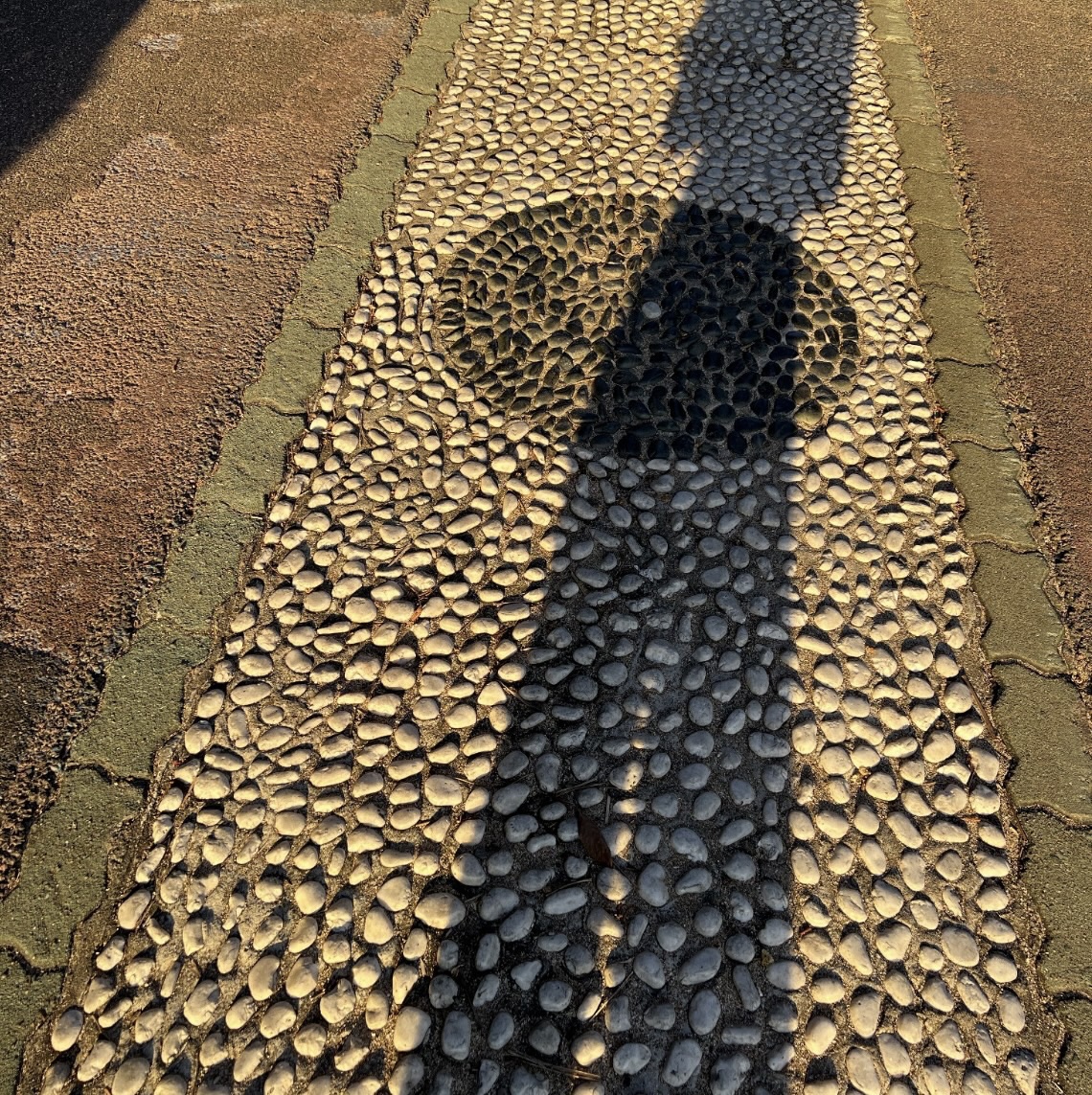
Whenever I visit Anguk, I find myself slowing down.
Unlike some of Seoul’s busier neighborhoods, Anguk rewards wandering without a strict plan. Small workshops, independent shops, traditional houses, and quiet alleys make it easy to spend hours simply exploring on foot.
This route combines one of my favorite dumpling restaurants in Seoul with two cafés that offer a welcome escape from the crowds.
Starting the Day at Komfortabel Coffee
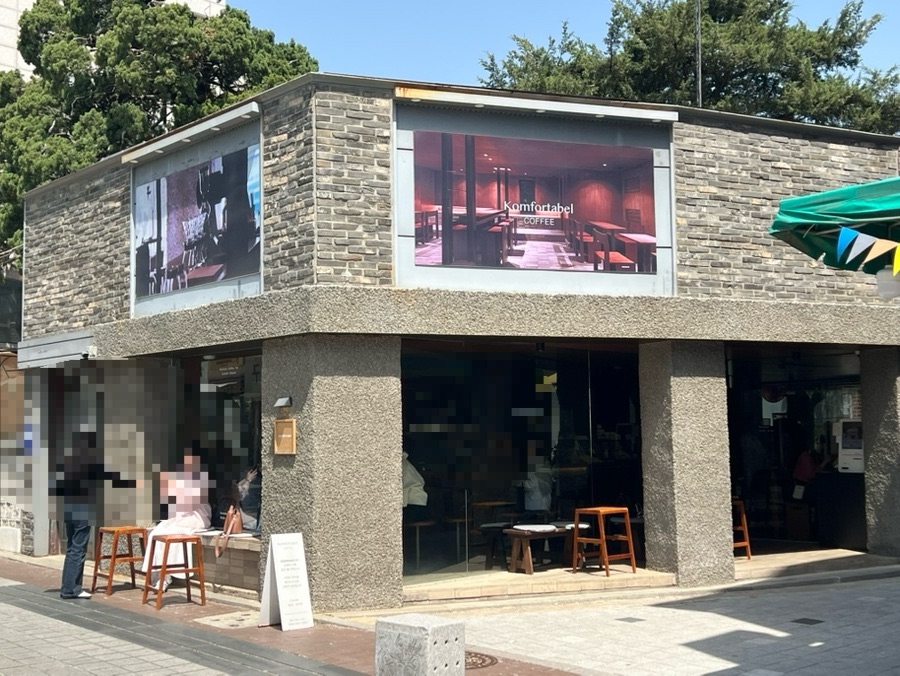
I began the afternoon at Komfortabel Coffee, a café operated by Granhand, the Korean fragrance company known for its perfumes and scents.
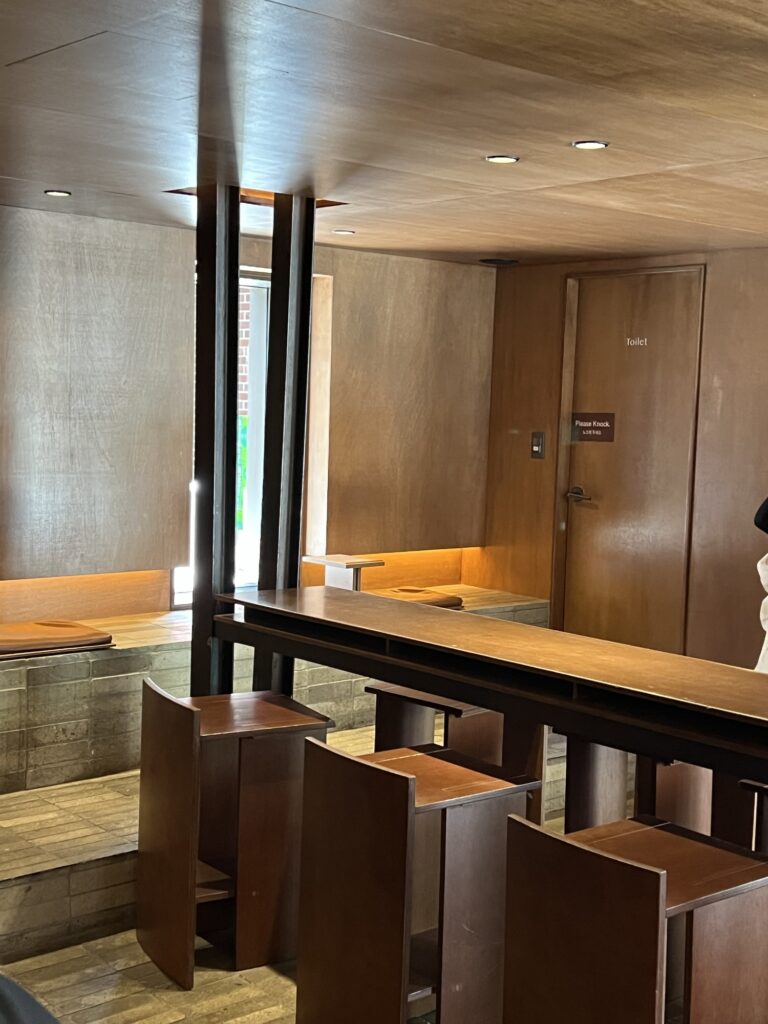
The first thing I noticed was the spacious interior. Despite being located near one of Seoul’s most popular tourist areas, the café felt surprisingly relaxed. The warm lighting and comfortable seating made it easy to settle in and enjoy a slower pace.
The café offers different coffee bean options, allowing visitors to choose between brighter, fruitier flavors or deeper, nuttier profiles depending on their preference.
One thing worth noting is that power outlets are not available, which actually helps maintain the café’s calm atmosphere. People seemed more focused on conversations, reading, or simply enjoying their coffee rather than working on laptops.
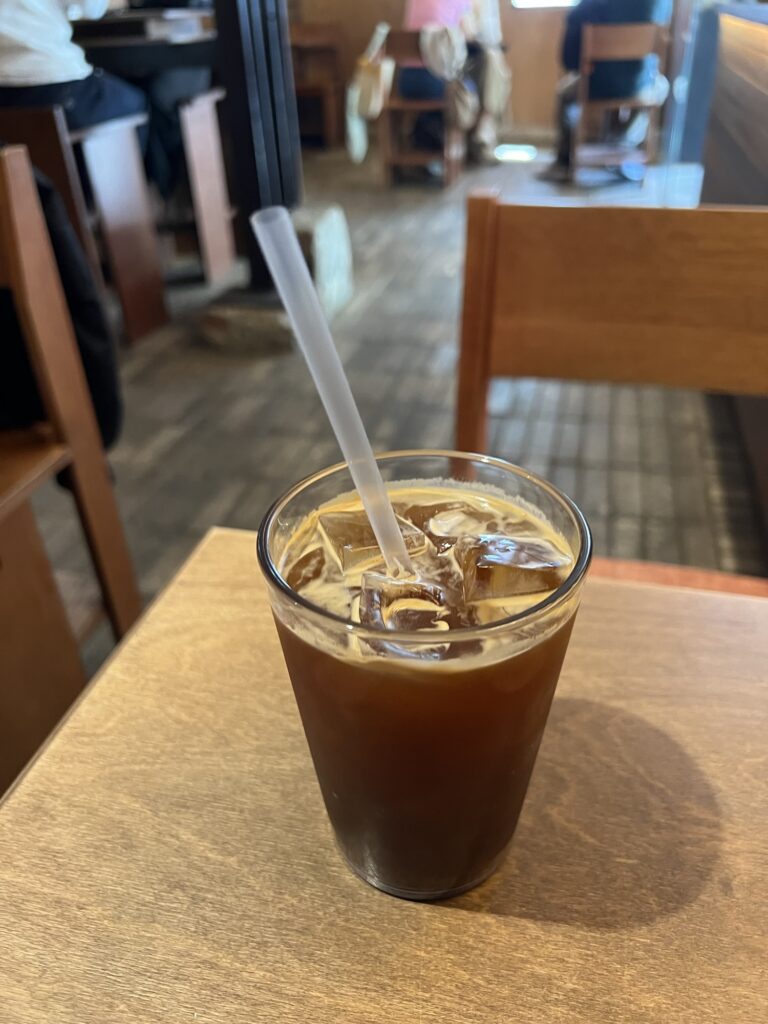
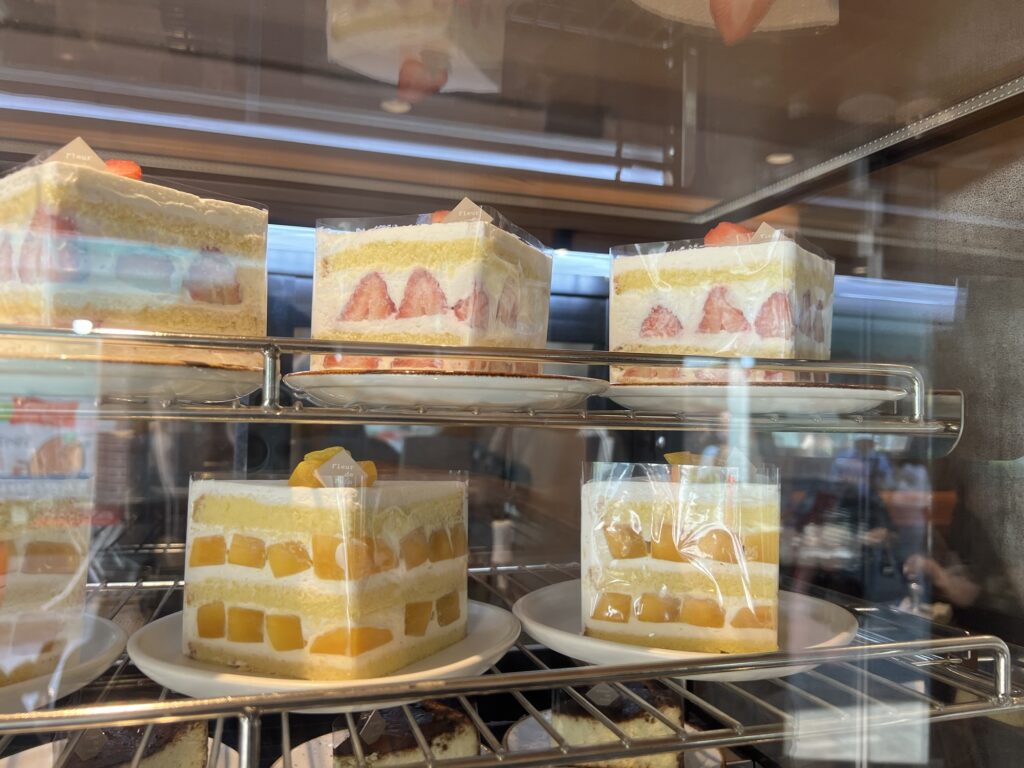
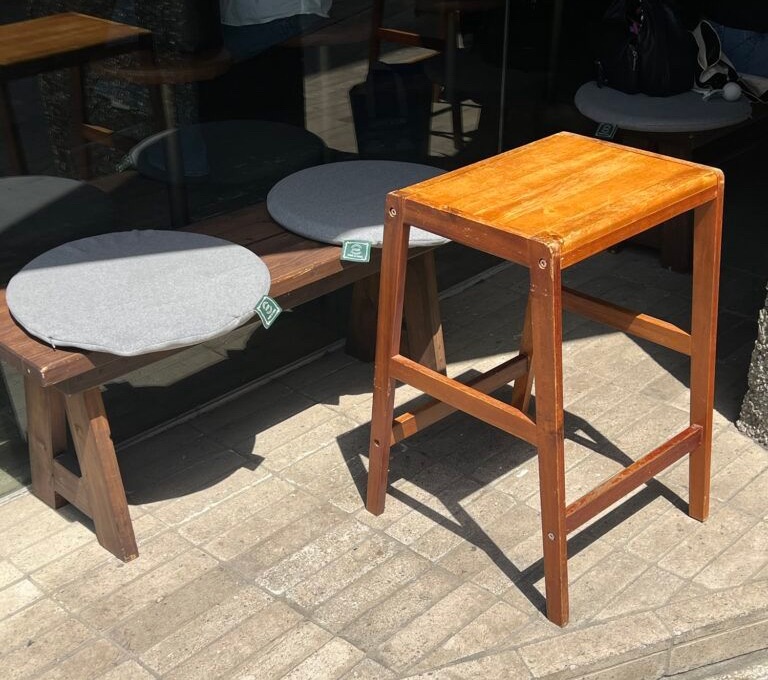
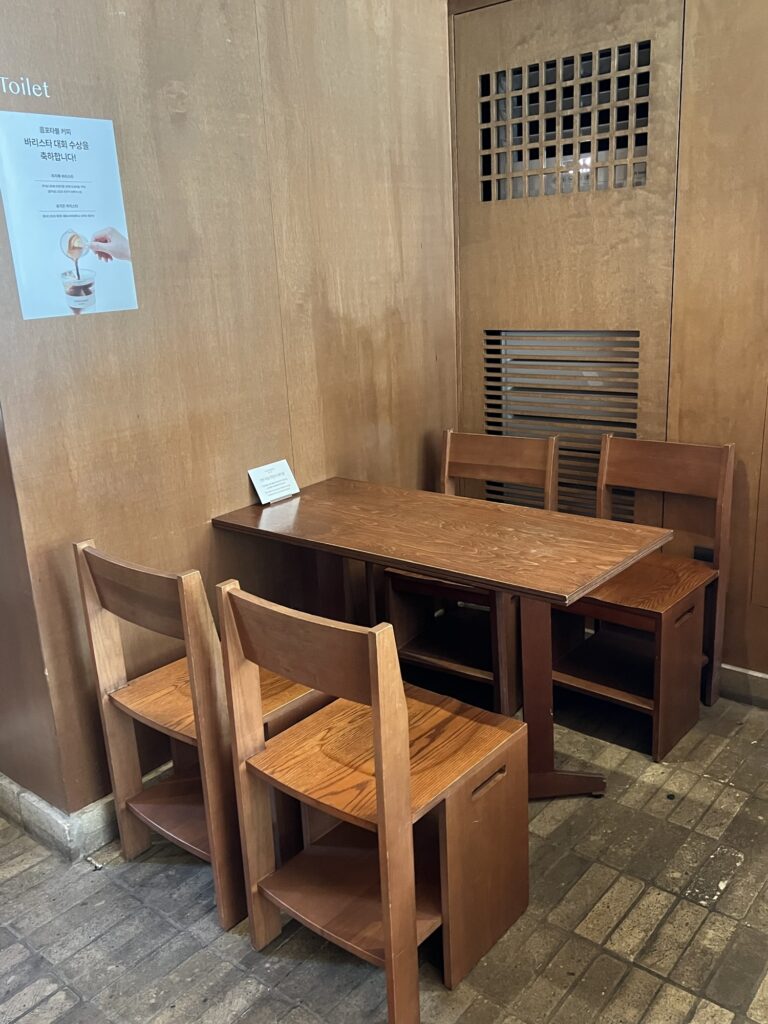
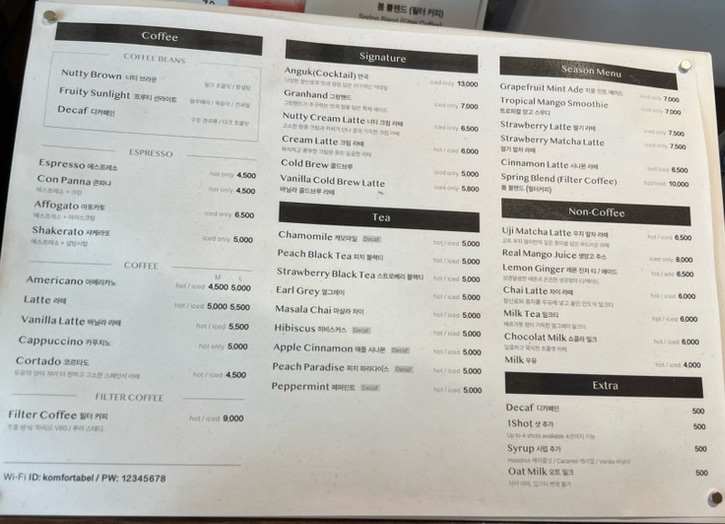
info about Komfortable coffee
address: 서울 종로구 윤보선길 16-1 (안국동)
16-1, Yunboseon-gil, Jongno-gu, Seoul, Republic of Korea
opening hours: 9am-10pm(last order 9:30pm)
price range: 4,500-13,000won
Lunch at Kkangtong Mandu
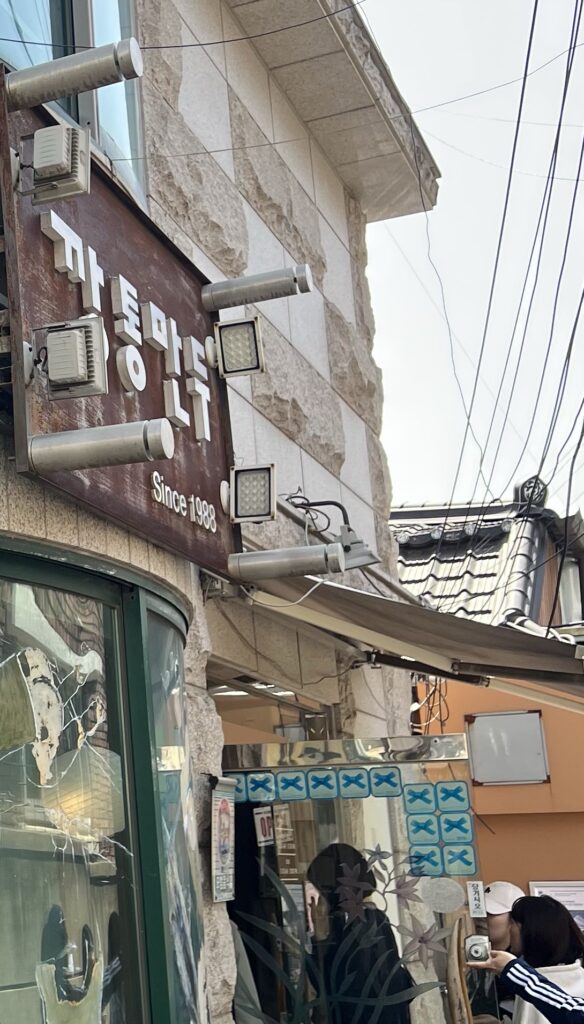
For lunch, I headed to Kkangtong Mandu, a restaurant that has become one of my favorite dumpling spots in Seoul.
The restaurant is popular enough that advance registration through Catch Table is usually necessary. Orders must be placed while waiting, and additional orders are not accepted later. On my visit, I arrived about thirty minutes before opening and was seated around 11:40 a.m.
The wait was worth it.
I’ve eaten dumplings in many places over the years, but Kkangtong Mandu remains the most memorable. The dumplings are remarkably clean and delicate in flavor, allowing the ingredients to stand out without excessive seasoning.
The meal felt satisfying without being heavy, and I could easily imagine pairing the dumplings with bibim noodles during the summer months.
Rather than being flashy or trendy, the restaurant focuses on doing one thing exceptionally well. For me, it was simply one of the best dumpling meals I’ve had.
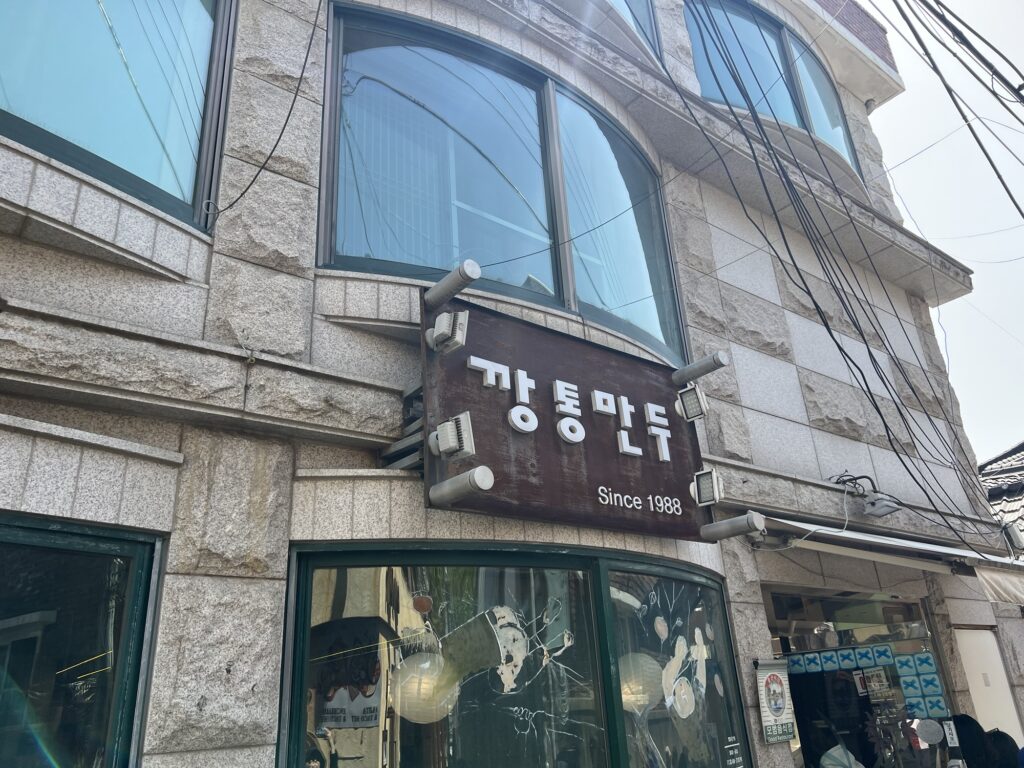
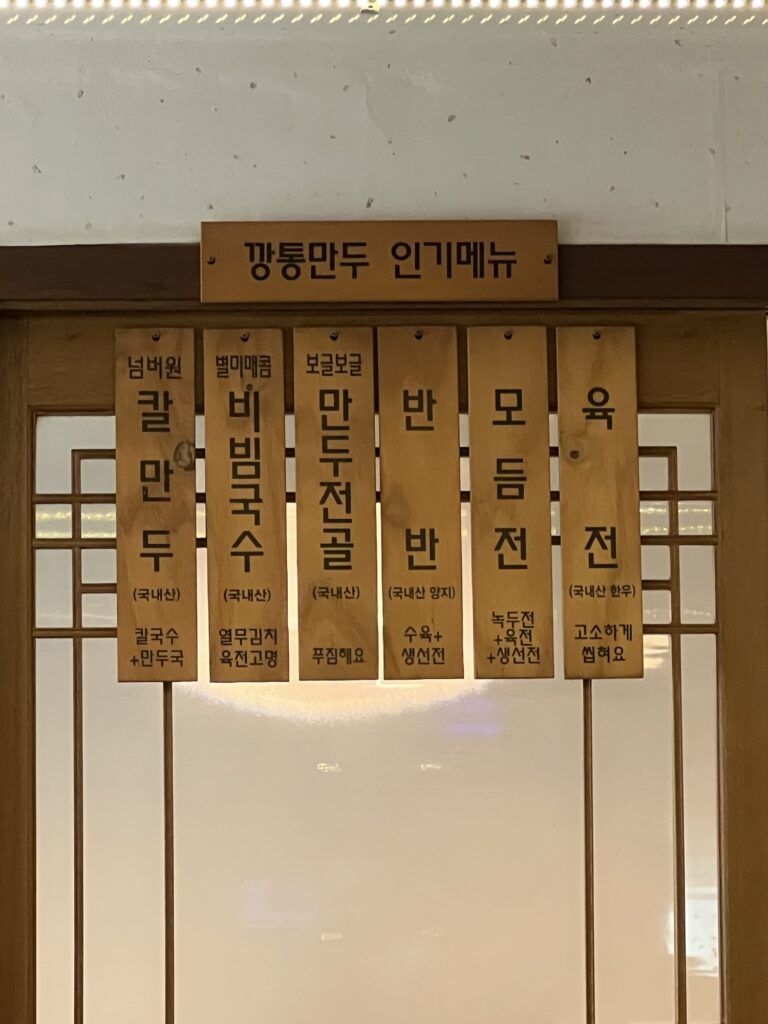
Recommended dishes:
Kal-mandu (칼만두) — Noodle and Dumpling Soup
A richer variation that adds noodles to the dumpling broth. Heavier and more filling — ideal for colder days or larger appetites.
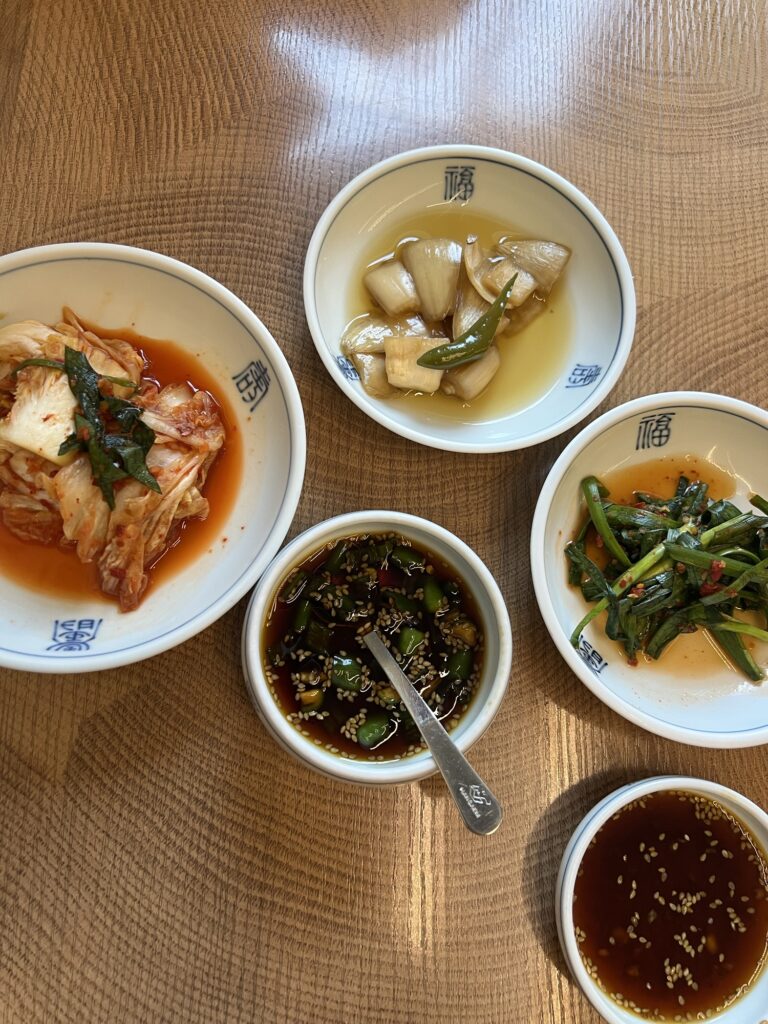
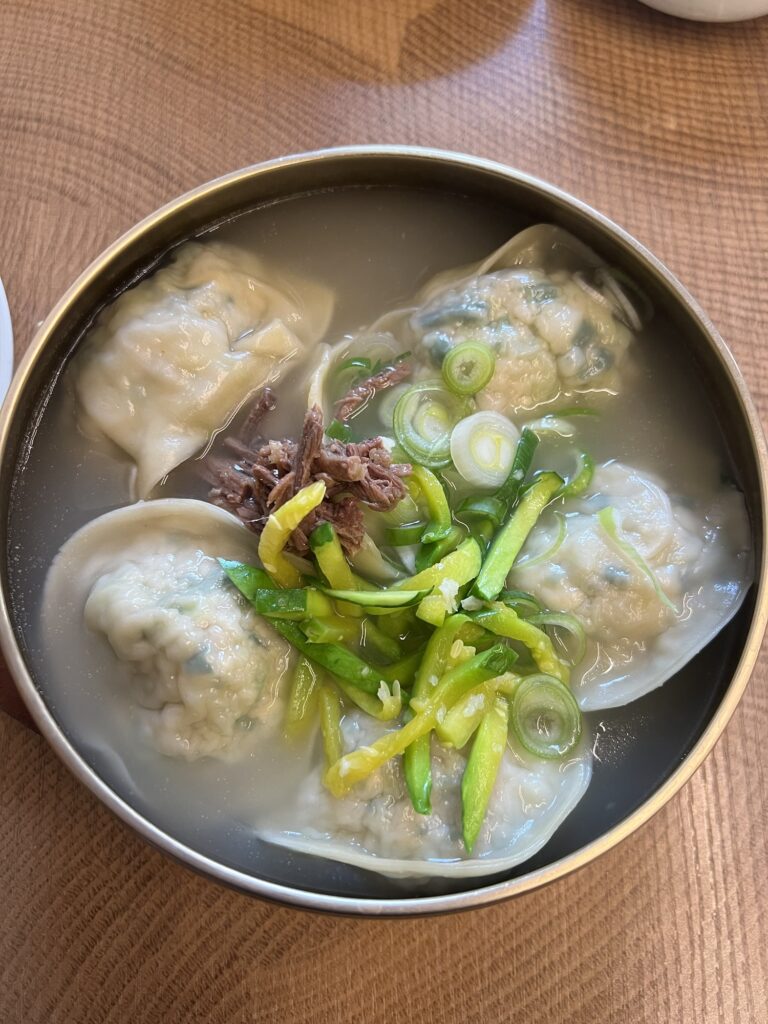
Mandu Guk (만두국) — Dumpling Soup, 13,000 KRW
The signature dish. Large, generously filled dumplings float in a clear, deeply flavored broth. The soup is warm and comforting in the way that only long-practiced recipes manage to be. This is the dish most regulars order.
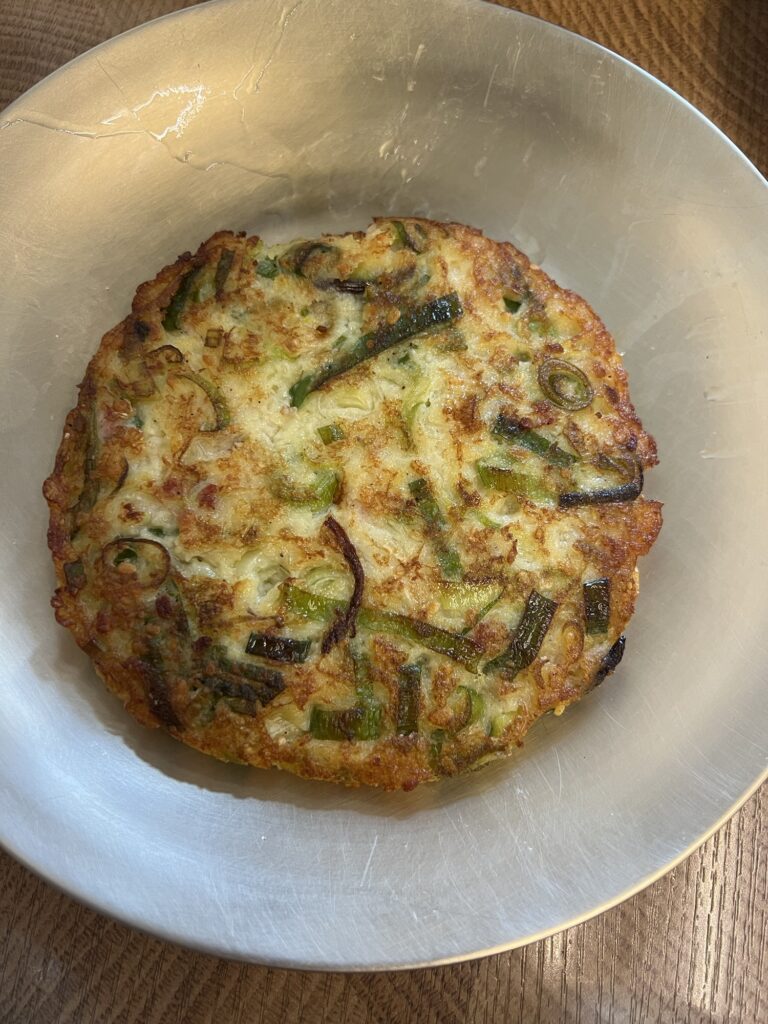
Bindaetteok (빈대떡) — Mung Bean Pancake, 11,000 KRW
A Korean savory pancake made from ground mung beans and mixed with vegetables and pork. Crispy on the outside, dense and satisfying inside. A strong complement to the dumplings.
Tip
This restaurant operates on a catch table reservation system at the entrance. When you arrive, you must register your party size and select your menu order at the same time — additional orders are not possible once you are seated. This is a firm policy, not a suggestion.
Every dumpling is folded with incredible precision. The thin, translucent skin reveals the vibrant colors of the fillings inside, much like a delicate sketch where every line matters.
The Atmosphere
This is the northern edge of Bukchon Hanok Village, close enough to Gyeongbokgung Palace and Insadong to combine into a longer day, but calm enough to feel like a neighborhood rather than a tourist checklist. This route combines one of my favorite dumpling restaurants in Seoul with two cafés that offer a welcome escape from the crowds.
Kkangtong Mandu

Address: 5-6, Bukchon-ro 2-gil, Jongno-gu, Seoul, Republic of Korea

Opening hours: 11:30am – 9pm (Mon–Fri, break hours 3:30–5pm)
Last order: lunch 2:40pm, dinner 8:10pm


Saturday: 11:30am – 8pm (last order 7:10pm)
Closed on Sunday

Price range: 11,000 – 20,000 KRW (per person)
A Quiet Break at Cafe Mueh
After lunch, I continued walking through Bukchon and eventually arrived at Cafe Mueh. Getting there requires a short walk past the Constitutional Court and Jaedong Elementary School, which means it sits slightly away from the busiest streets near Anguk Station — and that extra distance makes a real difference. Many cafés around Anguk Station are packed with visitors, but Cafe Mueh felt noticeably calmer, the kind of place where I could comfortably sit with a coffee and take a break after exploring the neighborhood.
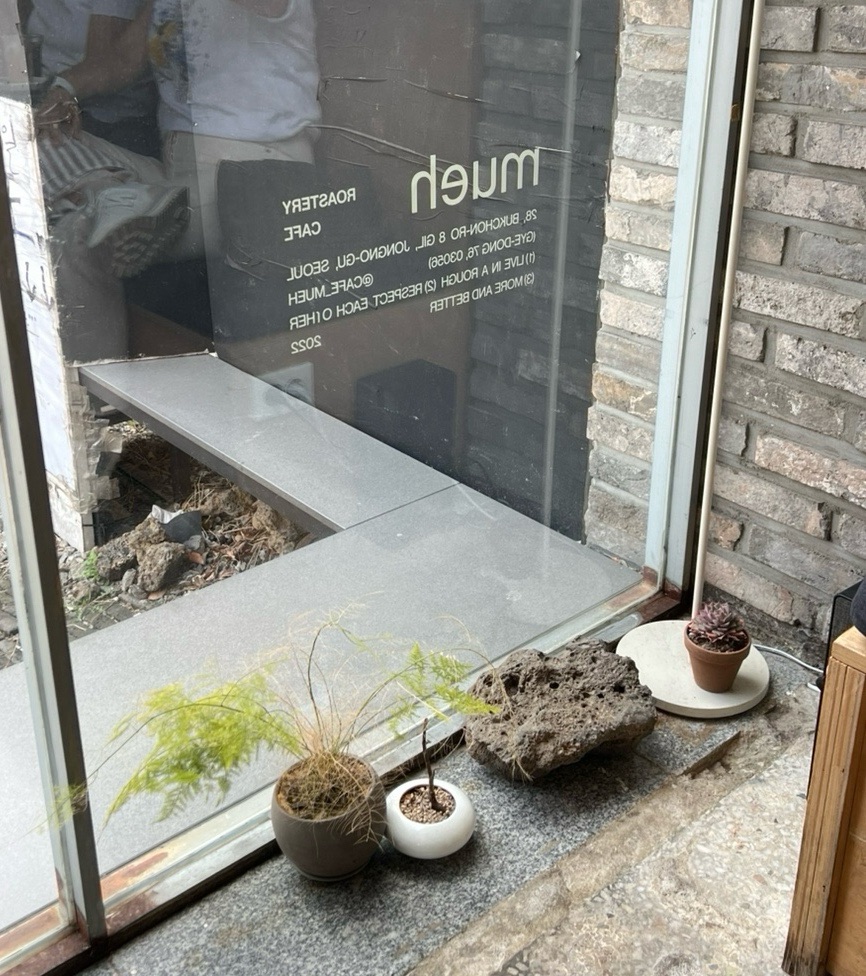
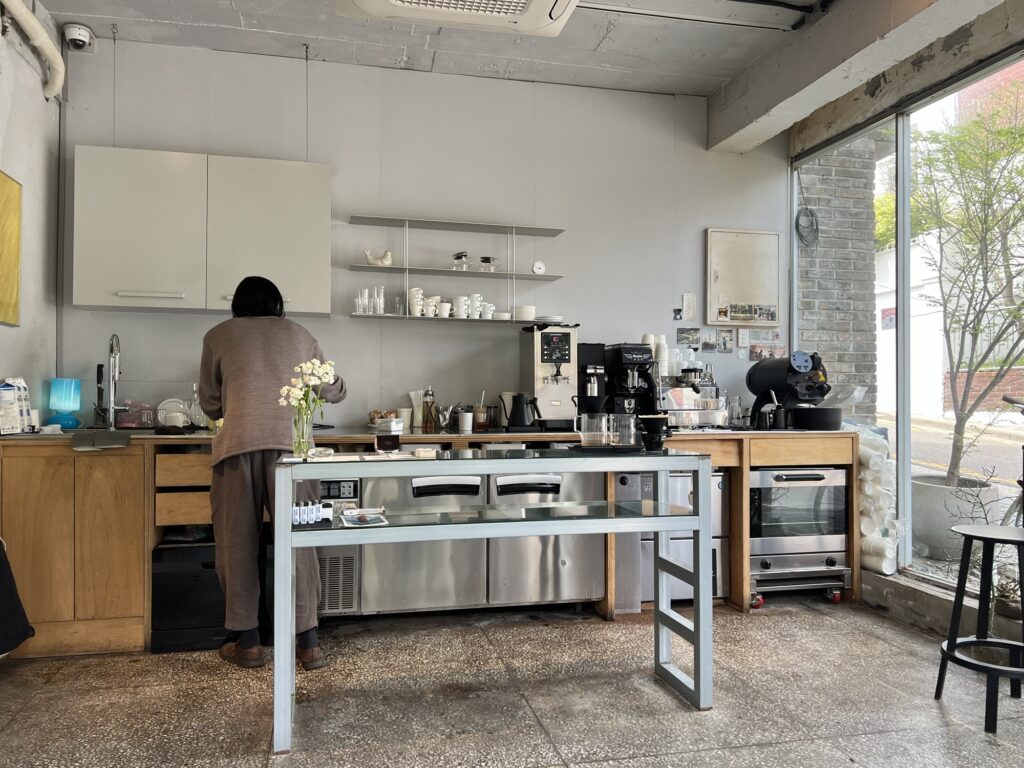
The coffee itself was excellent. I also tried the lemon tiramisu, which turned out to be much more tart than I expected.
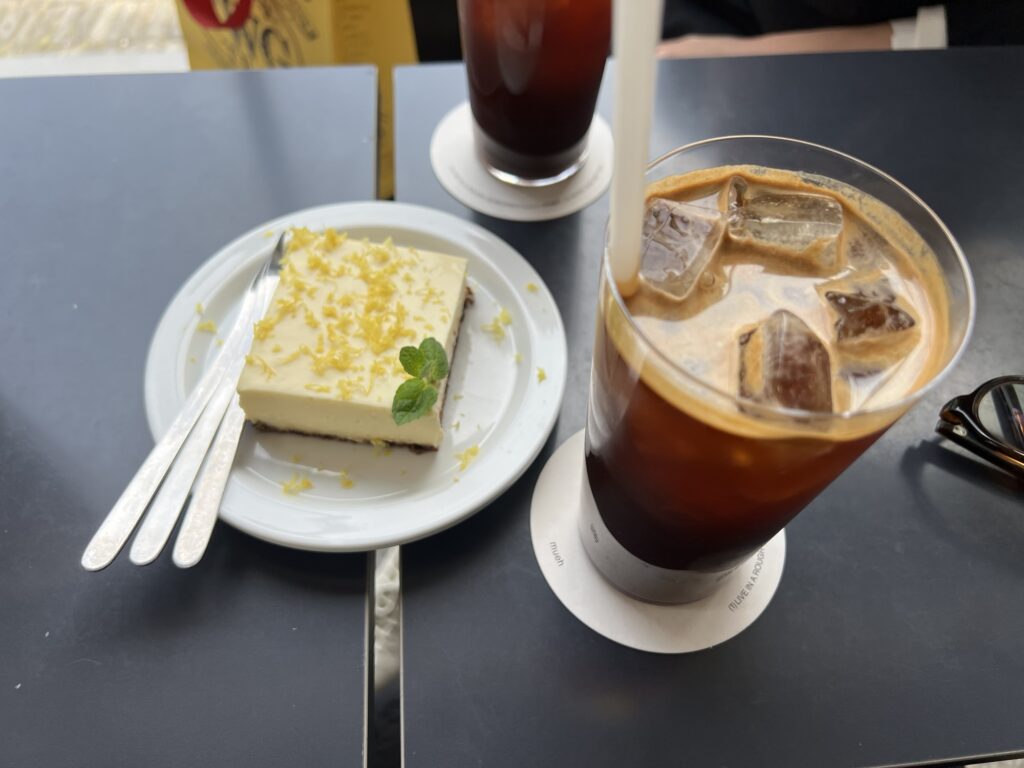
While it wasn’t my favorite dessert, I’d happily return for the coffee and try something different from the dessert menu next time.
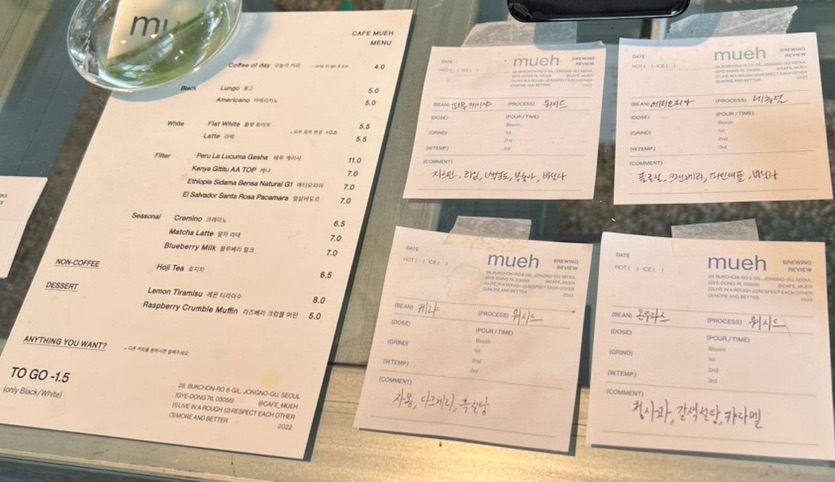
Cafe Mueh

Address: 28, Bukchon-ro 8-gil, Jongno-gu, Seoul, Republic of Korea

Opening hours: 10am – 8pm (Tue–Sun), 10am – 7pm (Monday)

Price range: 4,000 – 11,000 KRW
Why I Enjoy Anguk
What keeps bringing me back to Anguk isn’t just the food or coffee — it’s the experience of walking through the neighborhood itself. The narrow alleys are filled with small shops, craft studios, and hidden corners that reveal themselves gradually as you explore. Unlike some areas that feel designed entirely for tourists, Anguk still retains a sense of everyday life alongside its historic charm. Another advantage is its location: Gyeongbokgung Palace, Insadong, and Gwanghwamun are all within easy reach, making it easy to combine several neighborhoods into a single day of exploration.
Course Summary
Start at Komfortabel Coffee for a relaxed, no-laptop morning, walk to Kkangtong Mandu for lunch (arrive early — the wait can run 30–60 minutes), then finish at Cafe Mueh for a quieter afternoon break. Budget roughly 20,000–35,000 KRW total across all three stops. For me, this route wasn’t about checking famous places off a list — it was simply a pleasant way to spend an afternoon moving slowly through one of Seoul’s most enjoyable neighborhoods.
#angukcafe #bukchon #koreandumpling #seoultour